
Starting a workout routine at home sounds simple, but for many people, it becomes frustrating very quickly. The main reason is not lack of motivation — it’s trying to do too much, too fast.
This guide was created for real people with busy lives, limited time, and bodies that need adaptation, not punishment.
Here you’ll learn how to build a realistic weekly home workout schedule that improves health, helps with weight control, and builds consistency without exhaustion or injury.

🧠 Exercise Should Support Your Life, Not Exhaust It
One of the biggest mistakes beginners make is believing that exercise must be intense to be effective. In reality, consistency is far more important than intensity.
Short, regular workouts produce better long-term results than extreme routines that lead to burnout or injuries.
A good workout plan should:
- Fit your daily routine
- Respect your physical limits
- Be sustainable for months, not days
⏱️ How Long Should a Daily Workout Be?
There is no single correct duration. The ideal workout time depends on your fitness level, body condition, and routine.
General guidelines:
- 20–30 minutes → great for beginners and overweight individuals
- 30–45 minutes → ideal for general fitness
- 45–60 minutes → suitable for active people
Even 20 minutes of movement is far better than doing nothing.
⚖️ Training According to Body Type and Fitness Level
Slim or Physically Active People
- Faster recovery
- Less joint stress
- Can tolerate longer sessions
Recommended time: 40–60 minutes
Overweight Individuals
- Need joint protection
- High-impact exercise increases injury risk
- Progress must be gradual
Recommended time: 20–40 minutes
Sedentary or Returning to Exercise
- Body is still adapting
- Muscles and joints need time
Recommended time: 15–30 minutes

🗓️ Simple Weekly Home Workout Schedule
Monday – Light Cardio and Mobility
- Gentle movement
- Joint mobility
- Easy stretching
Duration: 20–30 minutes
Tuesday – Full-Body Movement
- Legs, arms, and core
- Bodyweight exercises
- Controlled pace
Duration: 30–40 minutes
Wednesday – Continuous Cardio
- Steady movement
- Comfortable breathing
- Focus on rhythm
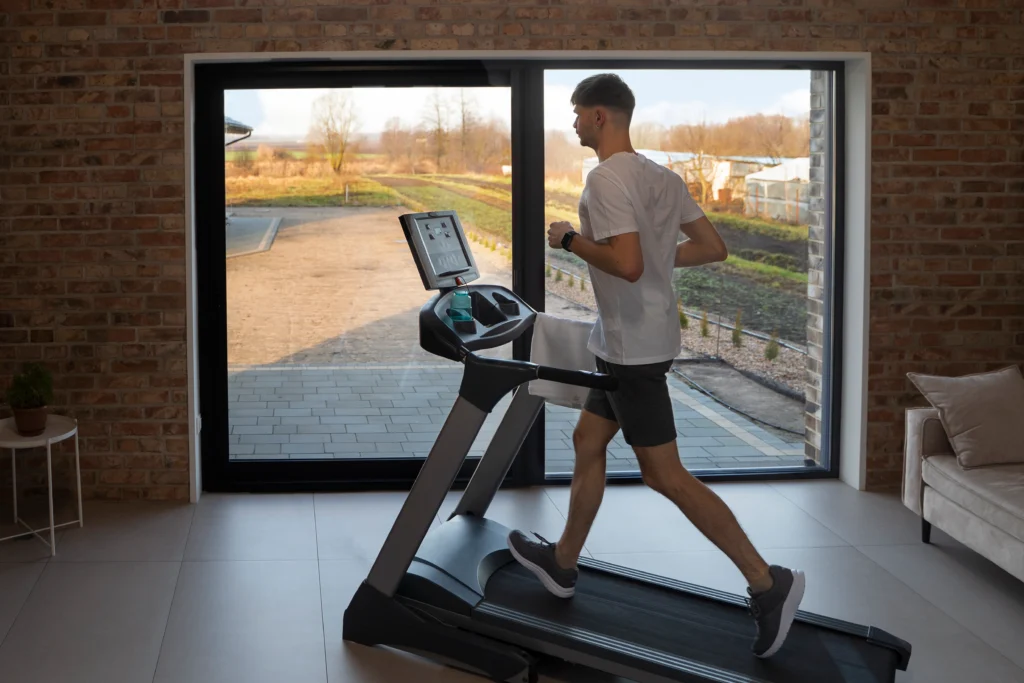
This can include walking or low-impact cardio, and some people prefer using a treadmill to help maintain pace and consistency.
Duration: 30–45 minutes
Thursday – Strength and Stability
- Lower body focus
- Core activation
- Balance exercises
Duration: 30 minutes
Friday – Light Activity or Cardio
- Relaxed pace
- Low stress
- Enjoyable movement
Some people choose walking, while others prefer a stationary bike or exercise bike for comfort and joint protection.
Duration: 20–40 minutes
Saturday – Optional Active Recovery
- Stretching
- Mobility
- Light walking
Sunday – Rest Day
Rest is essential for muscle recovery and long-term progress.

🚶 Walking: One of the Best Exercises You Can Do
Walking is often underestimated, but it is one of the most effective and sustainable forms of exercise.
Benefits include:
- Improved cardiovascular health
- Reduced stress
- Better circulation
- Joint-friendly movement
Many people combine outdoor walking with treadmill sessions to maintain consistency regardless of weather.
🚴 Low-Impact Cardio for Consistency
Low-impact cardio options are ideal for people who want to exercise regularly without excessive joint stress.
These activities help:
- Maintain rhythm
- Improve endurance
- Support weight management
Using tools like a treadmill or exercise bike can help people stay consistent, especially those training at home.
🧘 Stretching and Mobility: Why They Matter
Stretching helps:
- Reduce muscle stiffness
- Improve flexibility
- Prevent injuries
- Improve sleep quality
Even 5–10 minutes per day makes a noticeable difference.
👉 “To better understand how to choose the right equipment for home workouts, we’ve put together a complete guide that can be very helpful.”
ZeHuoGe Treadmill Review 2026: 3.0 HP Folding Treadmill for Home Running & Walking
Portable Walking Treadmill Review – Ideal for Under Desk and Home Office Use
Wenoker Exercise Bike Review 2026 – Complete Indoor Cycling Bike for Home Use
👉 Supplements After 40: Myths, Truths, and What Really Matters for Beginners
👉Supplements for People Starting to Exercise After 40
⚠️ Common Mistakes That Lead to Quitting
Many people quit because they:
- Train too hard at the beginning
- Copy advanced routines
- Ignore pain signals
- Skip rest days
Progress should feel challenging, not painful.
📈 How to Progress Safely
Follow this order:
- Increase workout duration
- Increase frequency
- Increase intensity
Never change all three at the same time.
🧩 Making Exercise Part of Your Routine
The best workout plan is the one you can maintain.
Choose:
- Realistic schedules
- Activities you enjoy
- Comfortable intensity
Some people prefer walking, others enjoy cycling, and many alternate between walking and using an exercise bike or treadmill to avoid boredom.
🧠 Mental Benefits of Regular Exercise
Exercise improves:
- Mood
- Focus
- Stress control
- Self-confidence
For many people, mental benefits become more important than physical results over time.
For readers who want to explore different types of home fitness equipment and understand what’s available on the market, you can browse a full selection of home gym equipment directly on Amazon.
❓ Frequently Asked Questions
Can I exercise every day?
Yes, as long as intensity varies.
Do I need equipment?
No, but some people find tools like a treadmill or stationary bike helpful for maintaining routine.
Is short training effective?
Yes, consistency matters more than duration.
🏁 Final Thoughts
You don’t need extreme workouts to improve your health.
You need:
- Regular movement
- A routine that fits your life
- Patience with your body
When exercise becomes part of your lifestyle, results follow naturally.

