
Rowing machine after 50 is a topic that more adults are searching for as home workouts become increasingly popular in the United States. Many people over 50 want a way to stay active, improve their health, and maintain strength without putting too much stress on their joints.
During the colder months across much of the U.S., outdoor activities like walking, jogging, or cycling often become difficult. Snow, ice, and freezing temperatures can make sidewalks unsafe and discourage people from exercising outside. Because of this, many adults start looking for indoor workout options that allow them to stay consistent without leaving home.
One piece of equipment that has been gaining attention is the rowing machine, sometimes simply called a rower. Unlike treadmills or exercise bikes that focus mainly on the lower body, rowing machines provide a full-body workout that combines cardiovascular exercise with strength training.
But for beginners over 50, an important question always comes up:
Is a rowing machine actually safe after 50?
The answer depends on several factors, including technique, workout intensity, and overall health. When used properly, rowing machines can offer many benefits such as improving cardiovascular endurance, strengthening muscles, and supporting weight management.

In this guide, we will explore:
- whether rowing machines are safe after 50
- the benefits of rowing workouts for beginners
- how many calories rowing can burn
- how long beginners should row each session
- possible risks and how to avoid them
- how rowing compares with treadmills and exercise bikes
Understanding these factors can help beginners make smarter decisions when building a safe and sustainable home workout routine.
What Is a Rowing Machine and How Does It Work?
A rowing machine is a piece of cardio equipment designed to simulate the motion of rowing a boat. The user sits on a sliding seat and performs a coordinated movement that involves pushing with the legs and pulling with the arms.
The movement happens in four basic steps:
- The user starts with bent knees and arms extended forward.
- The legs push the body backward while the seat slides along the rail.
- The arms pull the handle toward the torso.
- The body returns slowly to the starting position.
This continuous motion creates a smooth, rhythmic exercise that works several major muscle groups at once.
Most rowing machines use one of three resistance systems:
Air resistance
Air rowers increase resistance based on how hard the user pulls. The harder you row, the greater the resistance becomes.
Magnetic resistance
Magnetic rowers allow users to adjust resistance levels electronically or manually.
Water resistance
Water rowers use a tank of water to simulate the feeling of rowing in a real boat.
Each system offers slightly different workout experiences, but all provide the same basic rowing motion.
Why Rowing Machines Are Becoming Popular for Home Workouts
Rowing machines have become more popular in recent years, especially for home fitness. Many people compare them with treadmills and exercise bikes when building a home workout routine Rowing Machine Benefits Explained (2026)
Unlike equipment that targets only one muscle group, rowing machines engage both the upper body and lower body at the same time.
This makes rowing appealing for people who want efficient workouts.
Other reasons for their popularity include:
Full-body training
Rowing activates muscles in the legs, back, arms, shoulders, and core.
Cardiovascular conditioning
Rowing increases heart rate and improves endurance.
Low-impact movement
Rowing does not involve repetitive impact on the joints like running does.
Home workout convenience
Many people prefer exercising at home rather than traveling to a gym.
For adults over 50, these advantages can make rowing machines a practical option for staying active.
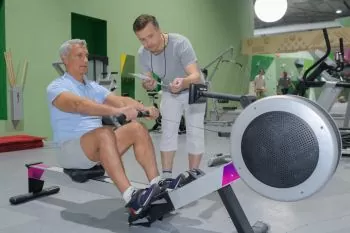
Is Rowing Safe After 50?
For many people, rowing can be a safe and effective form of exercise after 50 when performed with proper technique.
One of the biggest benefits of rowing is that it is considered a low-impact exercise. Unlike running or jumping, rowing does not involve repeated impact with the ground. This can reduce stress on the knees and ankles.
Because the movement is smooth and controlled, many adults find rowing more comfortable than high-impact activities.
However, safety depends on several factors.
These include:
- using proper posture
- avoiding excessive resistance
- starting with shorter sessions
- gradually increasing workout intensity
When beginners try to row too aggressively or with poor technique, they may experience discomfort in the lower back or shoulders.
For this reason, learning correct form is extremely important.
Rowing Machine Workout for Beginners Over 50
Beginners over 50 should start slowly when using a rowing machine. The goal during the first weeks is not maximum intensity but rather building consistency and learning proper technique.
A simple beginner routine might look like this.
Week 1–2
10 minutes per session
3 sessions per week
Focus on smooth and controlled movements.
Week 3–4
15 minutes per session
3 to 4 sessions per week
Increase time gradually while maintaining a comfortable pace.
After one month
20 minutes per session
3 to 4 sessions per week
At this stage many beginners feel stronger and more confident with the rowing motion.
Benefits of Using a Rowing Machine After 50
Rowing workouts can provide several potential health benefits for adults over 50.
Improved Cardiovascular Health
Rowing increases heart rate and can help improve cardiovascular endurance over time.
Strength and Muscle Engagement
Rowing activates major muscle groups including:
- legs
- back
- shoulders
- arms
- core
This combination of muscle engagement makes rowing a very efficient workout.
Low Impact on Joints
Because the movement is smooth and seated, rowing often places less stress on joints than running or jumping exercises.
Better Posture and Back Strength
Rowing strengthens the muscles of the upper back, which may help support posture when performed correctly.
Weight Management Support
Consistent exercise combined with healthy nutrition can help support weight management goals.
Want to Build a Safe Home Workout Routine?
Starting a home workout routine after 50 can feel confusing at first. The good news is that you don’t have to figure everything out alone. Understanding how to exercise safely, choose the right equipment, and build a simple weekly routine can make a huge difference in staying consistent.
If you’re just getting started, these guides can help you take the next step safely:
Start Exercising at Home After Sedentary Lifestyle: Safe Guide for Beginners and Seniors (2026)
Beginner Exercise Guide for Seniors: What to Do, What to Avoid, and What to Expect (2026)
Indoor Exercise Bike for Apartment: Quiet, Compact & No Neighbor Complaints (2026)
Weekly Home Workout Schedule for Beginners 2026
Rowing Machine Benefits Explained (2026)
These guides explain how beginners can train safely at home, choose the right equipment, and create a simple routine that supports long-term health.
Rowing Machine Workout: 20-Minute Routine for Beginners
A 20-minute rowing session can be an effective workout for beginners.
Warm-up
5 minutes of light rowing.
Main workout
10 minutes of steady rowing at moderate intensity.
Cool-down
5 minutes of slower rowing to gradually lower heart rate.
This routine can provide meaningful cardiovascular activity without requiring long workout sessions.
How Many Calories Can Rowing Burn?
Calorie burn depends on several factors including body weight, workout intensity, and individual metabolism.
However, many adults burn approximately:
150 to 250 calories in a 20-minute rowing session.
Higher intensity workouts may increase calorie expenditure.
Over time, regular workouts may contribute to improved fitness and energy levels.
How Noisy Is a Rowing Machine?
One concern people often have when buying home fitness equipment is noise.
Air rowing machines produce a sound similar to a fan or airflow. The noise increases slightly as rowing intensity increases.
However, many people find the sound manageable and comparable to household appliances like fans.
Compared with treadmills, rowing machines often produce less impact noise because the movement is seated and controlled.
How Much Space Does a Rowing Machine Require?
Rowing machines tend to be longer than other cardio machines.
Typical dimensions include:
- approximately 7 to 8 feet in length
- around 2 feet in width
Some models can be stored vertically to save space when not in use.
Before purchasing a rowing machine, it is important to measure the available space in your home workout area.
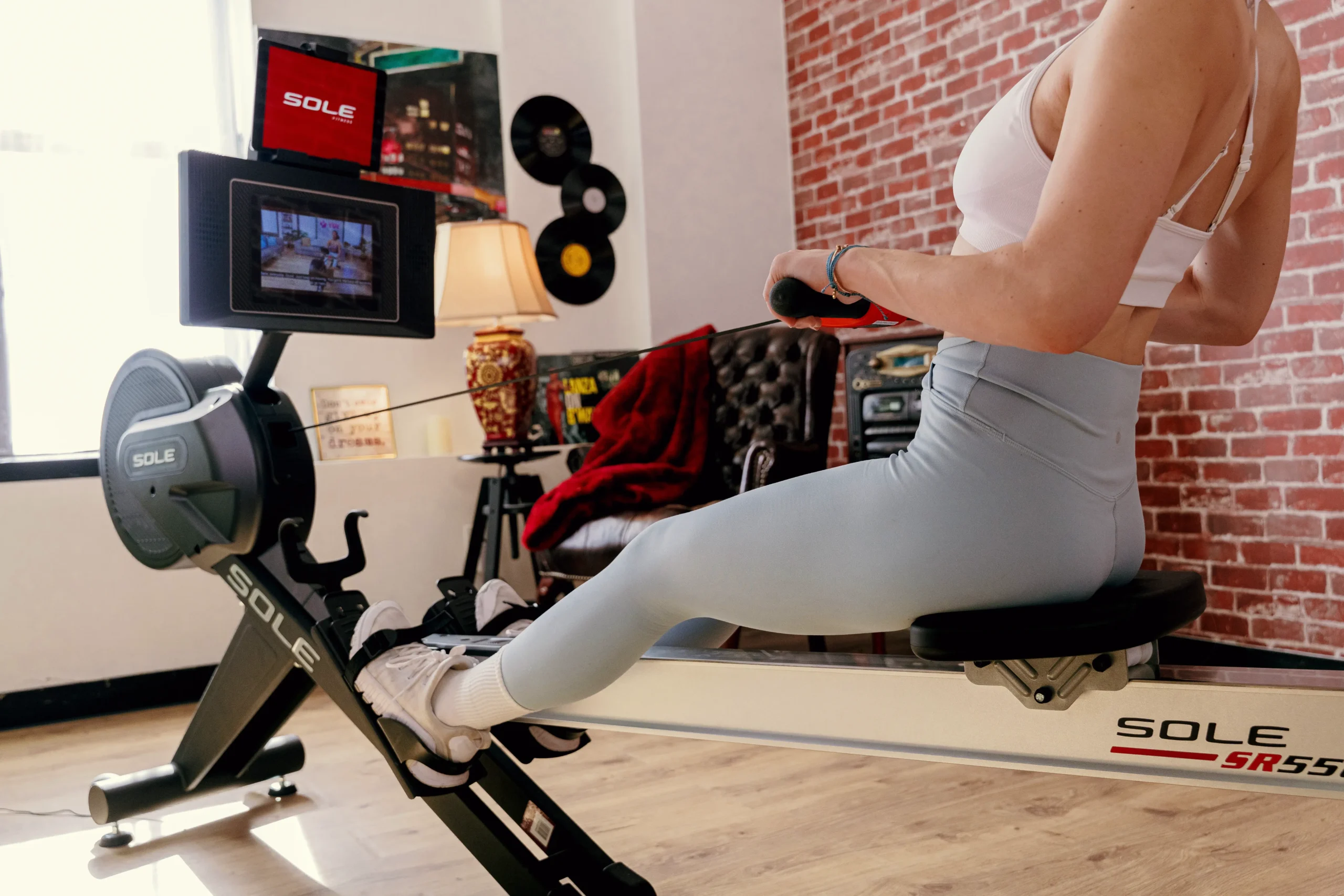
Rowing Machine vs Exercise Bike vs Treadmill
| Equipment | Impact on Joints | Muscles Used | Noise Level |
|---|---|---|---|
| Rowing Machine | Low | Full body | Moderate |
| Exercise Bike | Very low | Lower body | Low |
| Treadmill | Moderate | Lower body | Moderate |
Each piece of equipment has advantages.
Exercise bikes are often recommended for beginners who prefer seated cardio workouts.
Treadmills remain popular for indoor walking routines.
Rowing machines offer the benefit of combining strength and cardio training in one exercise.
Potential Risks and Common Mistakes
Although rowing is generally safe, beginners should avoid certain mistakes.
Poor posture
Rounding the back during the rowing motion can place unnecessary stress on the spine.
Pulling with the arms only
Rowing should begin with leg drive, not arm pulling.
Excessive resistance
Using too much resistance too early can cause fatigue and muscle strain.
Skipping warm-ups
A proper warm-up helps prepare muscles and reduce injury risk.
Who Should Be Careful with Rowing Machines?
Some individuals should exercise caution when starting rowing workouts.
This includes people with:
- severe lower back problems
- recent injuries
- uncontrolled cardiovascular conditions
Anyone experiencing pain during exercise should stop and consult a healthcare professional.
Final Thoughts
Rowing machines can be a valuable addition to a home workout routine for many adults over 50. They provide a full-body workout, support cardiovascular fitness, and offer a low-impact alternative to high-impact exercises.
When used with proper technique and a gradual progression, rowing workouts can help beginners stay active and maintain consistency in their fitness routines.
For people who prefer exercising indoors, especially during colder seasons, rowing machines offer a practical and effective way to stay active at home.
Improve Your Health Beyond Exercise
Exercise works best when combined with healthy daily habits. Understanding how strength, mobility, and cardiovascular activity work together can help you build a safer and more sustainable fitness routine over time.
According to Harvard Health Publishing, combining different types of exercise — including endurance, strength, balance, and flexibility — is one of the most effective ways to maintain long-term health and mobility.
Learn more in this guide from Harvard Health Publishing:
Harvard Health Publishing – The 4 Most Important Types of Exercise
FAQ
Is rowing good exercise after 50?
Yes, rowing can be a safe and effective low-impact workout when performed with proper technique.
How long should beginners row?
Many beginners start with 10–15 minutes and gradually increase to 20 minutes per session.
Is rowing better than cycling?
Rowing engages more muscle groups, while cycling focuses mainly on the lower body.
Can rowing help with weight management?
Rowing burns calories and may support weight management when combined with healthy nutrition.
Does rowing hurt the knees?
Rowing is generally low impact and often places less stress on the knees compared with running.
