Building a home gym on a budget might sound difficult at first. Many beginners believe that creating a workout space at home requires expensive machines, large rooms, and professional equipment.
But the truth is very different.
A well-planned home gym does not need to be expensive, complicated, or large. In fact, many people build effective workout spaces with just a few carefully chosen pieces of equipment.
For beginners, the goal is not to replicate a commercial gym. The goal is to create a simple environment that makes exercise easier, more consistent, and more sustainable over time.
This guide explains how beginners can build a home gym on a budget without wasting money, buying unnecessary equipment, or feeling overwhelmed by complicated setups.
You will learn:
• how much money you actually need to start
• which equipment is essential in the beginning
• which purchases beginners should avoid
• how to expand your home gym gradually
• how to create a workout space even in small homes
By the end of this guide, you will understand that building a home gym is not about spending more — it is about planning smarter.
Why More People Are Building Home Gyms Instead of Joining Gyms
Over the last decade, home gyms have become increasingly popular around the world.
Many beginners start their fitness journey with gym memberships, but eventually realize that traditional gyms often create barriers instead of helping build consistent habits.
Common challenges include:
• monthly membership costs
• travel time to the gym
• crowded workout spaces
• limited schedules
• lack of privacy
For many people, especially beginners, these obstacles make it harder to maintain a regular exercise routine.
A home gym removes many of these problems.
Instead of adjusting your life around the gym, you bring exercise into your own environment.
This simple shift changes everything.
A home gym allows you to:
• train whenever you want
• avoid crowded environments
• move at your own pace
• create a comfortable space for learning
For beginners, this environment often leads to better consistency.
And consistency is far more important than expensive equipment.

How Much Money Do You Actually Need to Build a Home Gym?
One of the biggest misconceptions about home gyms is the belief that they are expensive.
Many people imagine large machines, complex setups, and thousands of dollars in equipment.
But beginners do not need any of that.
A functional home gym can start with a very small budget.
Here is a realistic overview.
| Budget | What You Can Build |
|---|---|
| $50 – $100 | Basic workout setup |
| $150 – $300 | Solid beginner home gym |
| $400 – $700 | More complete home setup |
| $1000+ | Advanced home gym |
Most beginners fall into the $150 to $300 range, which is already enough to support a wide variety of exercises.
The key principle is simple:
Start small and expand gradually.
Trying to buy everything at once often leads to unnecessary spending and unused equipment.
Instead, a smart home gym grows over time.
The Biggest Mistake Beginners Make When Building a Home Gym
Many beginners believe they need to buy a lot of equipment before they can start exercising.
This is the most common and expensive mistake.
When people search online for home gym ideas, they often see impressive setups with:
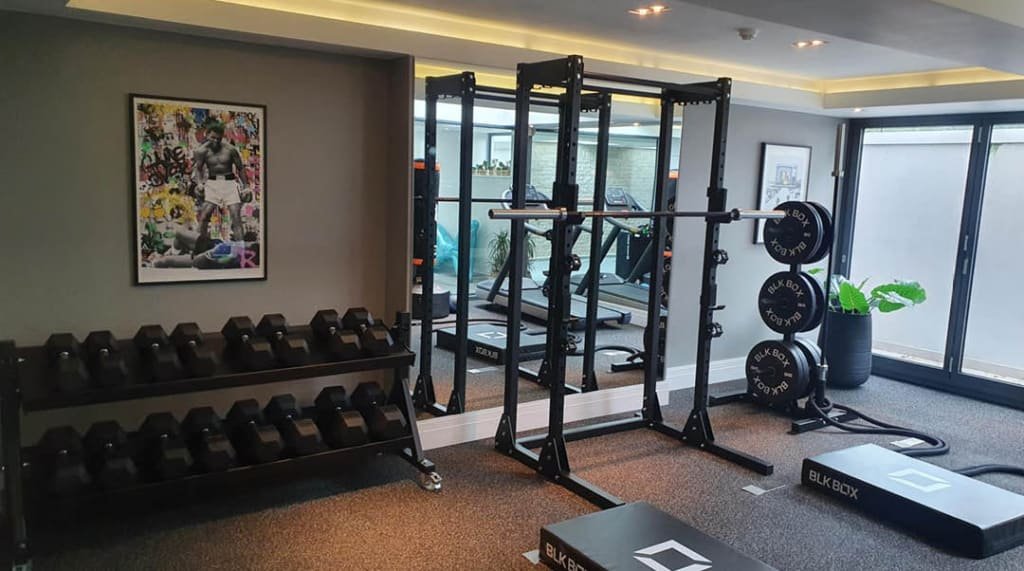
• squat racks
• cable machines
• weight stacks
• large cardio machines
While these setups look impressive, they are not necessary for beginners.
In fact, many people who buy large machines early end up using them very little.
A better strategy is to focus on versatile equipment that supports many different exercises.
For example:
Adjustable dumbbells can replace dozens of machines.
Resistance bands can provide strength training for almost every muscle group.
A simple exercise mat allows mobility training, stretching, and core exercises.
This approach reduces cost, saves space, and allows beginners to experiment before making bigger investments.
Choosing the Right Space for Your Home Gym
Another common misconception is that a home gym requires an entire room.
In reality, many effective home gyms start in very small spaces.
You do not need a large basement or garage.
Many people successfully build home gyms in:
• a small corner of the living room
• a spare bedroom
• part of a garage
• a balcony with enough space
• a home office corner
The most important factors are not size but practicality.
A good workout space should have:
• enough room for safe movement
• proper ventilation
• stable flooring
• minimal obstacles
For example, a space large enough to lay down an exercise mat and move your arms freely is often sufficient to begin.
As your home gym grows over time, you can reorganize the space or expand into larger areas.
But for beginners, a small and simple setup is usually more than enough.
The Smart Way to Build a Home Gym on a Budget
The smartest approach to building a home gym is to think in stages.
Instead of trying to build the perfect gym immediately, focus on creating a functional starting point.
Your home gym can evolve over time.
Many experienced home gym users built their setups gradually over several years.
This step-by-step approach offers several advantages:
• lower upfront cost
• better understanding of your training style
• fewer unnecessary purchases
• easier adaptation to available space
Let’s look at how this progression works.
Stage 1 – The Essential Equipment to Start Your Home Gym
If you are starting from zero, you only need a few basic items.
These pieces of equipment allow a surprising number of exercises.
🧾 Beginner Home Gym Essentials
| Equipment | Why It Matters |
|---|---|
| Adjustable Dumbbells | Strength training for the whole body |
| Exercise Mat | Comfort and safety for floor exercises |
| Resistance Bands | Versatile and very affordable |
With just these three items, beginners can perform exercises for:
• legs
• chest
• back
• shoulders
• arms
• core
Examples include:
• squats
• lunges
• dumbbell presses
• rows
• shoulder presses
• core exercises
This simple setup already allows effective full-body workouts.
Many people train successfully for months with just this equipment.
Why Adjustable Dumbbells Are One of the Best Budget Investments
Among all pieces of home gym equipment, adjustable dumbbells offer one of the best cost-to-benefit ratios.
They allow you to perform dozens of exercises while taking up very little space.
Instead of buying multiple pairs of dumbbells, adjustable models allow weight changes with a simple mechanism.
This makes them ideal for beginners who want to progress gradually.
Adjustable dumbbells can support exercises such as:
• chest presses
• bent-over rows
• shoulder presses
• biceps curls
• triceps extensions
• lunges
• goblet squats
Because they work for both upper and lower body exercises, they provide enormous training versatility.
For beginners building a home gym on a budget, they are often the most valuable first purchase.
Why Resistance Bands Are Underrated but Extremely Useful
Resistance bands are often overlooked because they look simple.
However, they are one of the most versatile training tools available.
Bands can be used for:
• strength training
• mobility exercises
• warm-ups
• rehabilitation
• stretching
They are especially useful for beginners because they allow gradual resistance adjustments.
Resistance bands are also very portable, making them easy to store even in small homes.
Many physical therapists and trainers recommend resistance bands for people returning to exercise after long periods of inactivity.
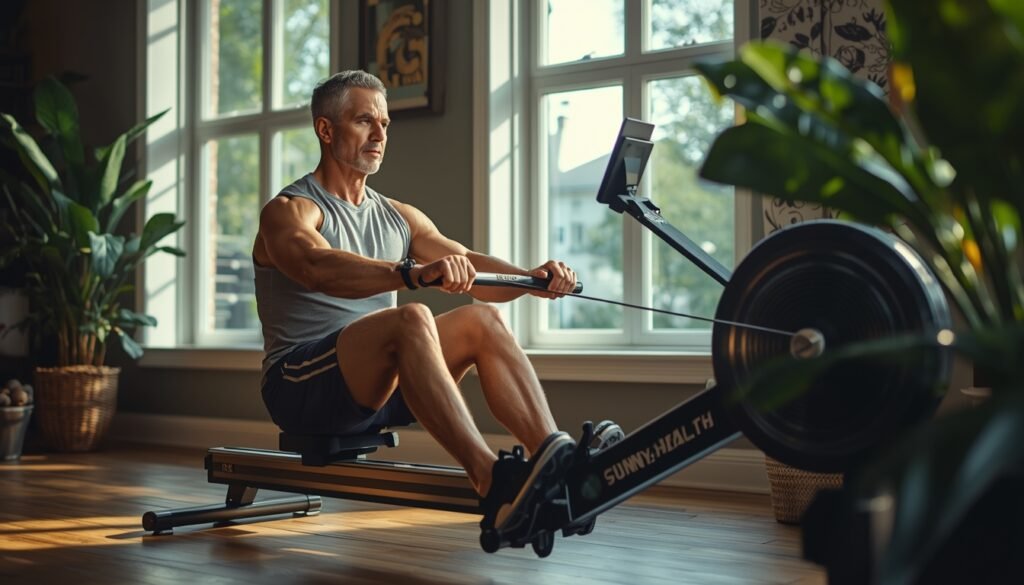
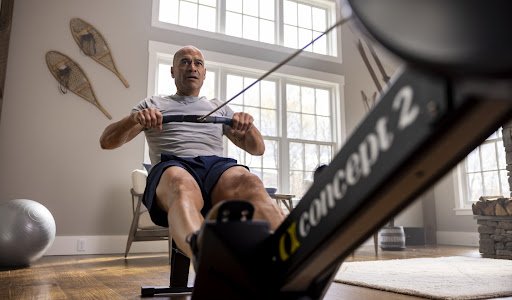
For readers interested in beginner-friendly full-body workouts, understanding the benefits of rowing machines can also help explain how different equipment supports complete training routines in a home gym setup. Rowing Machine Benefits Explained (2026)
Why an Exercise Mat Should Never Be Ignored
An exercise mat may seem like a small detail, but it significantly improves comfort and safety.
Without a mat, floor exercises can feel uncomfortable and may discourage beginners from practicing core training or mobility routines.
Exercise mats support:
• stretching
• yoga
• core workouts
• bodyweight training
They also protect the floor and reduce slipping.
For people training in apartments or shared living spaces, mats can help reduce noise and improve stability.
A quality mat is usually inexpensive and becomes one of the most frequently used pieces of equipment in a home gym.
Stage 2 – Expanding Your Home Gym
After a few months of consistent training, many beginners feel ready to expand their setup.
This is the moment to add a few extra pieces of equipment that increase exercise variety.
Some excellent additions include:
| Equipment | Benefit |
|---|---|
| Workout Bench | More strength training options |
| Jump Rope | Affordable cardio |
| Pull-Up Bar | Excellent upper-body training |
These additions still keep the home gym affordable while greatly expanding the number of exercises available.
A simple flat bench, for example, allows exercises such as:
• bench presses
• incline presses
• seated shoulder presses
• step-ups
Jump ropes are another extremely effective budget tool.
They provide excellent cardiovascular training while taking almost no space.
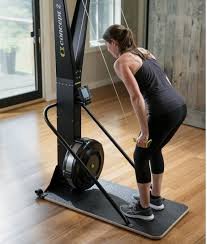
For readers exploring different types of cardio equipment, it can also be helpful to understand the advantages of indoor cycling options designed for home environments. Quiet Exercise Bikes for Apartment Living
Cardio Equipment for Small Home Gyms
Strength training equipment is essential, but many beginners also want a way to include cardiovascular exercise in their home gym routine.
The good news is that cardio training does not require large machines or complicated setups. Many effective options work well even in small spaces.
For beginners building a home gym on a budget, the goal should be to choose cardio equipment that is:
• compact
• affordable
• versatile
• easy to maintain
Some of the most beginner-friendly options include:
| Equipment | Why It Works |
|---|---|
| Jump Rope | Extremely affordable and efficient cardio |
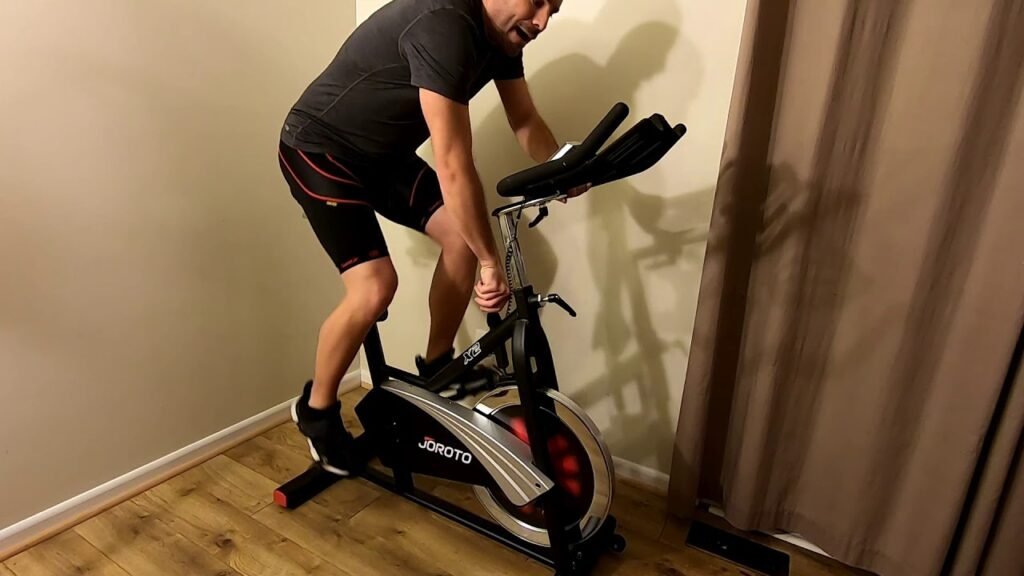
| Exercise Bike | Comfortable low-impact cardio |
| Walking Pad | Compact treadmill alternative |
| Rowing Machine | Full-body cardio workout |
Each option has its advantages depending on available space and personal preferences.
Jump ropes, for example, require almost no storage space and can deliver excellent cardiovascular workouts.
Exercise bikes are often preferred by beginners who want low-impact workouts that are gentle on the joints.
Walking pads have become increasingly popular because they allow light walking sessions at home, even in apartments or small rooms.
For readers exploring compact cardio equipment designed for modern homes, understanding how walking treadmills work can be helpful. Portable Walking Treadmill Review for Home Office Use
Equipment Beginners Should Avoid Buying Too Early
When building a home gym, knowing what not to buy is just as important as knowing what to buy.
Many beginners spend too much money on equipment they rarely use.
Some machines look impressive but are unnecessary during the early stages of training.
Examples include:
• large multi-station gym machines
• commercial squat racks
• cable crossover machines
• advanced weight stacks
These pieces of equipment are usually expensive and require significant space.
For beginners, they rarely provide enough value compared to simpler alternatives.
Instead of investing in complex machines, beginners benefit much more from versatile equipment like dumbbells, resistance bands, and benches.
These tools allow dozens of exercises without occupying large areas of the home.
The smartest home gyms start simple and grow gradually.
Home Gym vs Gym Membership: Which One Saves More Money?
One of the most common questions beginners ask is whether building a home gym actually saves money.
At first glance, gym memberships may appear cheaper because they involve a monthly payment rather than a large upfront cost.
However, over time the numbers often tell a different story.
Consider a typical gym membership:
| Expense | Average Cost |
|---|---|
| Monthly membership | $40 – $80 |
| Annual cost | $480 – $960 |
| Travel costs | additional |
| Time spent commuting | significant |
In comparison, a simple home gym setup might cost between $200 and $500 initially.
Once the equipment is purchased, there are usually no monthly costs.
Over a period of several years, many people discover that a home gym becomes significantly cheaper than paying for memberships they may not use consistently.
More importantly, a home gym eliminates travel time and scheduling restrictions.
For busy people, this convenience often leads to more consistent workouts.
How to Upgrade Your Home Gym Over Time
A home gym does not need to be perfect on the first day.
In fact, the best home gyms evolve slowly.
Many experienced home gym users began with only a few basic pieces of equipment and gradually expanded their setups.
A practical upgrade path might look like this:
Year 1 – Basic Setup
• adjustable dumbbells
• exercise mat
• resistance bands
• jump rope
This simple setup already supports a wide variety of workouts.
Year 2 – Expanding the Gym
After developing consistent exercise habits, many people add equipment such as:
• workout bench
• pull-up bar
• heavier dumbbells
These additions increase exercise variety and allow more advanced strength training.
Year 3 – More Advanced Equipment
For those who want to expand further, possible additions include:
• rowing machine
• exercise bike
• compact treadmill
• barbell set
At this stage, the home gym begins to resemble a complete training environment.
But the key idea remains the same:
grow gradually instead of buying everything at once.
Who Benefits the Most from a Budget Home Gym?
A budget home gym can be beneficial for many types of people, but some groups benefit even more.
Beginners Starting Their Fitness Journey
For beginners, a home gym removes many of the pressures associated with traditional gyms.
Learning exercises at home often feels more comfortable and less intimidating.
Busy Professionals
People with demanding schedules often struggle to visit gyms regularly.
A home gym allows workouts at any time of day, making it easier to maintain consistency.
People Who Prefer Privacy
Some individuals simply feel more comfortable exercising in their own space.
A home gym provides privacy and control over the environment.
Adults Over 40 or 50
Many adults prefer home workouts because they allow slower progression, safer routines, and more control over intensity.
Home gyms make it easier to focus on sustainable long-term fitness habits.
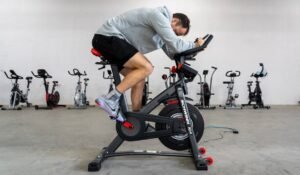
For readers exploring different beginner-friendly equipment options, understanding how exercise bikes work can also help clarify whether cycling is a good addition to a home gym setup. Wenoker Exercise Bike Review
Common Beginner Mistakes When Building a Home Gym
Even with a limited budget, beginners sometimes make mistakes that lead to wasted money or unused equipment.
Some of the most common mistakes include:
Buying Too Much Equipment Too Soon
Many beginners feel excited and purchase several machines immediately.
Later, they discover they only use a small portion of the equipment.
Choosing Equipment Based Only on Price
Extremely cheap equipment can sometimes lack durability.
It is often better to buy fewer items with reliable quality.
Ignoring Available Space
Buying equipment without measuring the available space can lead to awkward layouts and unusable workout areas.
Always measure first.
Skipping Research
Reading reviews and educational guides helps beginners avoid costly mistakes.
Understanding how equipment works before buying it is essential.
Building a Sustainable Home Fitness Routine
While equipment is helpful, the true success of a home gym depends on habit building.
Consistency matters far more than expensive equipment.
Beginners should focus on:
• short but regular workouts
• gradual progress
• realistic expectations
A home gym removes many barriers to exercise, but motivation still comes from routine and discipline.
Starting small and improving gradually is the most sustainable approach.
FAQ – Building a Home Gym on a Budget
What is the cheapest way to build a home gym?
The cheapest approach is to start with bodyweight exercises and add simple equipment such as resistance bands and dumbbells.
Even a small investment can support effective workouts.
How much space do I need for a home gym?
Many beginners start with an area large enough for an exercise mat and basic movement.
Small corners of rooms often work well.
Is building a home gym worth it for beginners?
Yes. A home gym removes many obstacles to exercise and allows beginners to learn at their own pace.
Can I build a home gym without machines?
Absolutely. Many effective workouts rely on bodyweight training, dumbbells, and resistance bands rather than machines.
Conclusion
So, is it possible to build a home gym on a budget?
Absolutely.
In fact, many of the most effective home gyms start with only a few simple pieces of equipment.
Instead of focusing on expensive machines, beginners should focus on building a practical and sustainable workout environment.
By starting small, choosing versatile equipment, and upgrading gradually, anyone can create a home gym that supports long-term fitness goals.
A well-planned home gym is not about spending more money.
It is about making exercise easier, more accessible, and more consistent.
Improve Your Health Beyond Exercise
Exercise is only one part of a healthy lifestyle. Nutrition, sleep, and daily habits also play a major role in long-term well-being.
For evidence-based guidance on healthy living and physical activity, Harvard Health Publishing provides trusted educational resources.