
Best Low-Impact Exercises for People Over 50: Staying active after 50 is one of the most powerful ways to protect your health. Regular movement helps control blood pressure, improves cholesterol levels, strengthens the heart, and supports joint mobility.
But one question often creates confusion:
Which exercises are actually safe for your body after 50?
Some workouts place unnecessary stress on the knees, hips, or lower back. Others protect the joints while still improving cardiovascular health and muscle strength.
Understanding the difference between these exercises — and the equipment that can make them safer — can help you build a routine that supports your body instead of damaging it.
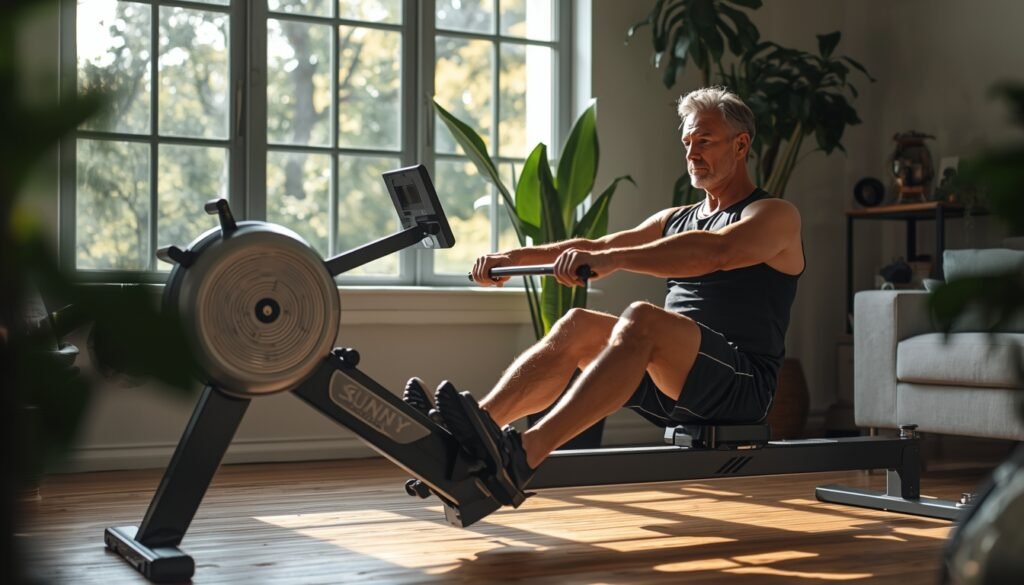
Important Health Note
The information in this article is intended for educational purposes only. It does not replace professional medical advice, diagnosis, or treatment.
Every person’s body, medical history, and physical condition are different, especially after the age of 50. Before starting a new exercise routine or significantly increasing your physical activity, it may be helpful to consult a qualified healthcare professional who can evaluate your individual situation.
The goal of this guide is simply to explain how different exercises and equipment may affect the body, helping readers make more informed decisions about staying active safely.
Why Low-Impact Exercise Matters More After 50
As the body ages, joints, muscles, and connective tissues naturally change. Cartilage becomes thinner, recovery time may become longer, and the body may become more sensitive to repetitive stress.
This does not mean exercise becomes dangerous.
In fact, regular physical activity becomes even more important after 50.
Movement can support many aspects of health, including:
- cardiovascular function
- blood pressure regulation
- cholesterol balance
- joint mobility
- muscle preservation
- mental well-being
However, the type of exercise often matters more than the intensity.
High-impact workouts such as jumping, sprinting, or aggressive plyometric training can place sudden stress on joints that may already be adapting to age-related changes.
Low-impact exercises, on the other hand, are designed to reduce joint stress while still stimulating the body.
They typically involve movements where:
- both feet stay on the ground
- motion is controlled
- impact is minimized
- resistance can be adjusted gradually
This makes them ideal for people who want to stay active without exposing their bodies to unnecessary strain.
For readers who are beginning their fitness journey later in life, it may also be helpful to review Exercise Guide for Beginners and Adults Over 50: What to Do, What to Avoid, and What to Expect (2026), which explains how to start exercising safely.
Low-impact exercise is not about doing less.
It is about training smarter.

Walking: One of the Safest Low-Impact Exercises After 50
Walking remains one of the most accessible and sustainable forms of physical activity at any age.
Unlike complex training routines that require special skills or equipment, walking is a natural human movement. This simplicity makes it an excellent starting point for individuals who want to improve their health without overwhelming their bodies.
Health Benefits of Walking
Regular walking can support several aspects of health.
Many people notice improvements in:
- cardiovascular endurance
- circulation
- energy levels
- sleep quality
Walking also encourages consistent movement, which is often more beneficial than occasional intense exercise sessions.
For adults over 50, consistency is one of the most important elements of maintaining long-term health.
When performed regularly, walking can help support:
- healthy blood pressure levels
- cholesterol balance
- weight management
- joint mobility
It is also considered a low barrier exercise, meaning most people can perform it without extensive training.
Why Walking Is Considered Low Impact
Walking produces relatively gentle forces on the joints compared with activities such as running or jumping.
Because each step is controlled and moderate in intensity, the knees and hips typically experience less stress.
However, impact still exists.
For some individuals, especially those with knee sensitivity or excess body weight, long walking sessions on hard surfaces may cause discomfort.
This is one reason many people choose to walk on a treadmill, where speed and incline can be adjusted gradually.
Readers interested in understanding how treadmills can support safe home workouts may find useful insights in Benefits of Treadmill for Home Use: Why It’s One of the Easiest Ways to Stay Active.
Possible Limitations of Walking
Although walking is generally accessible, it may not provide the same level of full-body engagement as some other exercises.
For example:
- upper body muscles are less activated
- resistance is limited
- intensity increases mainly through speed or incline
Because of this, many people combine walking with other forms of exercise that stimulate additional muscle groups.
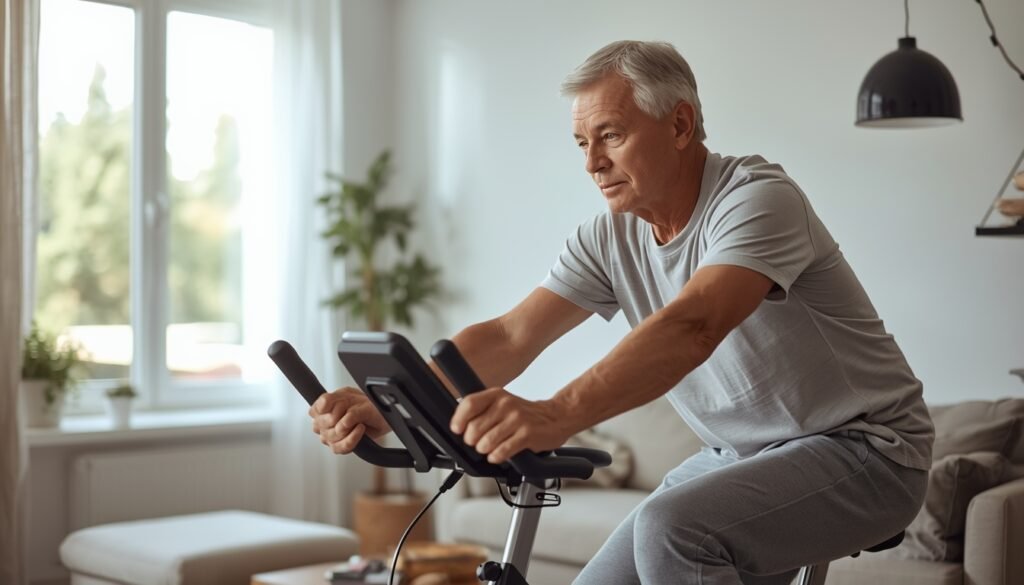
Cycling: Joint-Friendly Cardio That Reduces Knee Impact
Cycling is often considered one of the most joint-friendly cardiovascular exercises available.
Unlike walking or running, cycling removes much of the repetitive impact on the knees and hips because the body remains supported by the seat while pedaling.
This makes cycling particularly attractive for individuals who want to improve cardiovascular fitness while protecting sensitive joints.
Cardiovascular Benefits of Cycling
Pedaling provides a rhythmic, controlled movement that stimulates the heart and lungs without requiring high impact.
Regular cycling sessions can support:
- improved endurance
- stronger cardiovascular function
- calorie expenditure
- better circulation
For beginners, cycling also offers a major advantage: intensity can be adjusted gradually.
Resistance levels can be increased slowly as fitness improves, making the exercise adaptable for different experience levels.
Why Many People Prefer Exercise Bikes at Home
Outdoor cycling can be enjoyable, but it also depends on weather conditions, traffic safety, and available space.
For this reason, many people choose a stationary exercise bike for home workouts.
Stationary bikes allow users to:
- control resistance
- monitor workout duration
- maintain consistent pacing
They also tend to be quiet and compact, which makes them practical for apartments or shared living environments.
Readers who want to explore this option further can read Indoor Exercise Bike for Apartment: Quiet, Compact & No Neighbor Complaints (2026).
Possible Limitations of Cycling
Although cycling is low impact, it still requires attention to posture and seat positioning.
Poor bike setup can sometimes lead to discomfort in areas such as:
- lower back
- hips
- knees
Adjusting saddle height and maintaining proper posture can help reduce these issues.
Cycling also provides less weight-bearing stimulus than walking, which means it may not contribute as strongly to bone density support.
For this reason, cycling is often combined with other forms of activity.
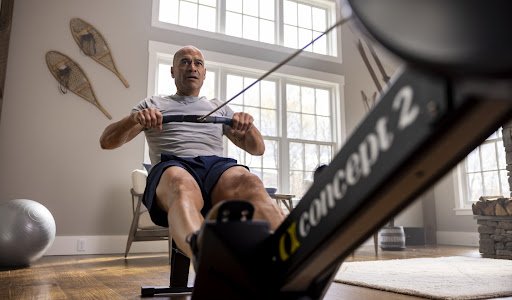
Rowing Machines: Full-Body Exercise With Controlled Impact
Rowing machines have gained popularity in home fitness environments because they provide a full-body workout while remaining relatively low impact.
Unlike exercises that focus primarily on the legs or arms, rowing engages multiple muscle groups simultaneously.
The rowing movement involves coordinated activation of:
- legs
- core
- back
- shoulders
- arms
This makes it one of the most comprehensive cardiovascular exercises available in home training.
Cardiovascular and Muscular Benefits
Because rowing uses large muscle groups at the same time, it can stimulate both muscular endurance and cardiovascular conditioning.
Many people appreciate rowing because it allows them to train several parts of the body within a single movement pattern.
Potential benefits include:
- improved endurance
- stronger back muscles
- enhanced posture
- increased calorie expenditure
The sliding seat mechanism also reduces joint impact, making the movement smoother compared with high-impact activities.
For readers interested in understanding the broader advantages of this type of equipment, Rowing Machine Benefits: Why So Many Beginners Are Choosing It for Home Workouts provides a deeper explanation.
Technique Matters in Rowing
Although rowing machines are generally low impact, technique plays an important role in comfort and safety.
Improper posture, particularly excessive rounding of the lower back, may create unnecessary strain over time.
Learning the correct rowing sequence — pushing with the legs, engaging the core, and pulling with the arms — helps distribute effort across the body more evenly.
When performed with controlled movement and moderate intensity, rowing can become a valuable component of a balanced workout routine.
Elliptical Machines: Smooth Movement for Sensitive Joints
Elliptical trainers are specifically designed to simulate walking or running while minimizing the impact associated with those movements.
The pedals move in a smooth oval pattern, allowing the feet to remain in constant contact with the machine. This eliminates the repeated impact that occurs when the foot strikes the ground during running.
For individuals with joint sensitivity, this can make elliptical machines one of the most comfortable cardio options available.
Benefits of Elliptical Training
Elliptical workouts often combine features of both walking and cycling.
The movement pattern can help support:
- cardiovascular conditioning
- joint mobility
- balanced muscle engagement
Many elliptical machines also include moving handles, which allow the upper body to participate in the motion.
This can make the exercise feel more dynamic while distributing workload across multiple muscle groups.
Why Ellipticals Are Often Considered Joint-Friendly
Because the feet never leave the pedals, the knees and hips experience significantly less impact compared with activities like running.
For people managing mild joint discomfort, this smoother motion may feel more comfortable than other forms of cardio.
However, the movement pattern can require a brief adaptation period for beginners who are unfamiliar with the coordination required.
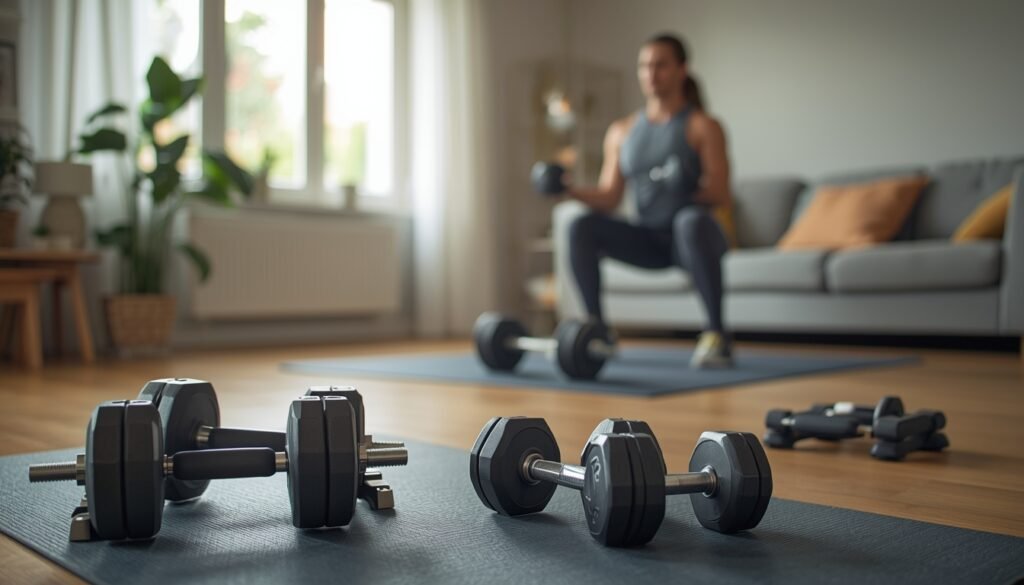
Light Strength Training With Dumbbells After 50
While cardio exercises often receive the most attention, strength training also plays an important role in maintaining health after 50.
As the body ages, muscle mass gradually declines — a natural process known as sarcopenia.
Regular strength training can help slow this process by stimulating muscle fibers and encouraging the body to maintain functional strength.
Benefits of Light Dumbbell Training
Using light dumbbells can support several aspects of physical health:
- preservation of muscle mass
- improved balance and stability
- support for bone density
- better functional strength for daily activities
Strength training also complements cardiovascular exercise by strengthening muscles that support joint stability.
For example, stronger leg muscles can help protect the knees during walking or cycling.
Importance of Controlled Progression
When beginning strength training after 50, gradual progression is essential.
Starting with lighter weights and focusing on proper movement patterns can help the body adapt safely.
Many beginners perform exercises such as:
- light squats
- seated shoulder presses
- controlled arm curls
- gentle core exercises
When performed with good technique and moderate resistance, dumbbell training can become a valuable component of a balanced routine.
How to Choose the Right Exercise After 50
Not every exercise works the same way for every body.
After 50, choosing the right activity often depends on three important factors:
1️⃣ Joint condition
2️⃣ Fitness level
3️⃣ Personal comfort
Some people feel great walking every day. Others may find cycling more comfortable for their knees. Some prefer rowing machines because they involve the entire body.
The best exercise is usually the one that:
- feels comfortable
- can be performed consistently
- does not produce persistent pain
- fits your daily routine
Consistency tends to produce better results than short periods of intense training.
For readers who are already following a workout routine and want to increase intensity safely, it may also be helpful to read How to Progress Your Home Workouts Safely (Without Injury or Burnout) (2026), which explains how to gradually increase workout difficulty without overwhelming the body.
Progress should always be gradual.
Understanding Joint Impact in Different Exercises
Different types of exercise place different levels of stress on the joints.
Impact does not necessarily mean something is dangerous, but understanding it helps people choose movements that match their physical condition.
For example:
- running produces high repetitive impact
- walking produces moderate impact
- cycling produces very low impact
- rowing distributes effort across the body
When individuals understand these differences, they can build routines that reduce unnecessary strain.
Joint Impact Comparison Between Popular Home Fitness Equipment
📦 Joint Impact Comparison Box
| Equipment | Joint Impact | Muscle Engagement | Ideal For |
|---|---|---|---|
| Walking / Treadmill | Moderate | Legs, cardiovascular system | Beginners, daily activity |
| Exercise Bike | Very Low | Legs, cardio | Knee-sensitive individuals |
| Rowing Machine | Low | Full body | Cardiovascular + strength |
| Elliptical | Very Low | Legs + upper body | Joint protection |
| Dumbbells | Low (controlled) | Upper & lower body | Strength maintenance |
What This Comparison Means
Each piece of equipment offers a different training experience.
Exercise bikes and ellipticals tend to place the least stress on joints, making them attractive for individuals managing knee sensitivity.
Rowing machines distribute effort across multiple muscle groups, which can reduce localized strain.
Walking and treadmills remain extremely accessible but may produce moderate impact depending on speed and incline.
Strength training with dumbbells typically produces low impact when movements are controlled.
The key is not choosing the “best” machine — it is choosing the most appropriate one for your body and routine.
Signs Your Body Is Adapting Well to Exercise
One of the most encouraging experiences when starting a workout routine is noticing gradual improvement.
Many people begin to recognize positive changes within the first few weeks.
Common signs that the body is adapting well include:
- workouts feel easier
- breathing becomes more controlled
- recovery between sessions improves
- muscles feel stronger during daily activities
- energy levels increase
These signs usually indicate that the body is responding positively to regular movement.
However, progress should always be gradual and sustainable.
Increasing duration, frequency, or intensity too quickly may overwhelm the body.
Signs It May Not Be Time to Increase Intensity Yet
Listening to the body is an important part of long-term fitness.
Certain signals may indicate that the body needs more time to adapt before increasing training load.
Examples include:
- persistent knee discomfort
- joint stiffness lasting several days
- unusual fatigue
- recurring lower back pain
- swelling in joints after workouts
Temporary muscle soreness can be normal when beginning exercise, but sharp or persistent pain should not be ignored.
When these signals appear, reducing intensity or taking additional recovery time may be helpful.
Gradual progress is far more sustainable than pushing through discomfort.
How to Combine Equipment for a Balanced Routine
Many people assume they must choose only one type of exercise.
In reality, combining different activities often produces the best results.
For example:
Example weekly combination
Monday
Walking or treadmill cardio
Tuesday
Light dumbbell strength training
Wednesday
Exercise bike cardio
Thursday
Mobility and stretching
Friday
Rowing machine session
Saturday
Light activity or outdoor walk
Sunday
Rest and recovery
Alternating between different exercises helps distribute stress across different muscle groups and joints.
It also prevents boredom, which can be one of the biggest barriers to long-term consistency.

Mental Benefits of Staying Active After 50
Physical exercise is often associated with weight management or cardiovascular health.
However, many people discover that the mental benefits become just as important.
Regular movement may support:
- improved mood
- reduced stress
- better sleep quality
- greater mental clarity
- increased confidence
Exercise also provides a sense of routine and accomplishment.
For many individuals, staying active becomes less about physical appearance and more about maintaining independence, mobility, and quality of life.
External Resource for Further Reading
For readers who want to explore the broader relationship between lifestyle habits and long-term health, Harvard Health Publishing provides helpful educational material.
👉 External resource:
Harvard Health Publishing – 5 timeless habits for better health
Frequently Asked Questions
What is the safest exercise after 50?
Many low-impact exercises can be appropriate, including walking, cycling, elliptical training, rowing, and light strength training. The safest option usually depends on the individual’s physical condition and comfort level.
Is walking enough exercise after 50?
For many people, regular walking can support cardiovascular health and mobility. Some individuals also include light strength training or other activities to maintain muscle strength.
Are exercise bikes good for knee pain?
Exercise bikes are often considered a low-impact option because the pedaling motion reduces joint impact compared with activities like running.
Are rowing machines safe for beginners?
Rowing machines can be suitable for beginners when used with proper technique and moderate intensity. Learning correct posture and movement sequence can help reduce unnecessary strain.
Should people over 50 lift weights?
Light strength training can help maintain muscle mass and support joint stability. Many people begin with light dumbbells and controlled movements.
How often should someone exercise after 50?
Many people aim for consistent activity several days per week, combining cardiovascular exercise, strength training, and flexibility work.
What if exercise causes discomfort?
Temporary muscle soreness may occur when starting a new routine. However, persistent pain or joint discomfort may indicate that intensity should be reduced or that additional recovery time is needed.
Is it too late to start exercising after 50?
It is never too late to begin moving more regularly. Many people start exercising later in life and gradually improve their mobility, endurance, and overall well-being.
Final Thoughts
Staying active after 50 does not require extreme workouts or complicated training plans.
In many cases, the most effective routines are built around simple, sustainable exercises that support the body rather than overwhelm it.
Walking, cycling, rowing, elliptical training, and light strength exercises all provide different benefits. Understanding how each movement affects the body allows individuals to build routines that feel both safe and enjoyable.
Consistency is often more powerful than intensity.
A routine that fits naturally into daily life can support long-term health, mobility, and quality of life.
❤️ Before You Begin
If you’re over 50, your health deserves attention – not pressure.
Starting or returning to exercise after years of inactivity should always be done gradually. The goal is not intensity or speed, but consistency and safety.
If you have joint pain, heart conditions, or chronic health issues, consider speaking with a healthcare professional before starting a new workout routine.
This article is educational and designed to help you understand how indoor cycling equipment works. It is not medical advice.

