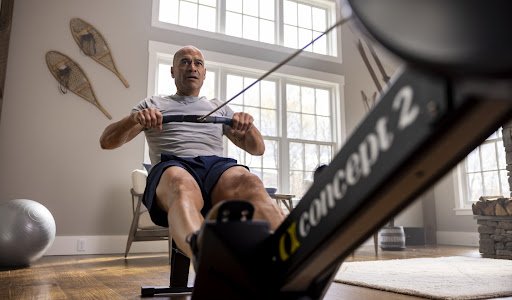
Adjustable Dumbbells for Home Workouts: For many people starting a home workout routine, the first big question is simple:
What equipment should I actually use?
Some machines are expensive.
Others take up too much space.
And many beginners quickly realize that a lot of gym equipment can feel intimidating at first.
That’s why adjustable dumbbells have become one of the most popular tools in home fitness.
They are compact.
They are versatile.
And they can support a wide range of exercises without requiring an entire room full of machines.
But before buying or using adjustable dumbbells, there are several important things beginners — especially adults over 50 — should understand.
Questions like:
- Are adjustable dumbbells actually worth it?
- Are they safe for beginners?
- What weight should you start with?
- Can they help build strength without risking joint injuries?
- And how do they compare to traditional dumbbells?

This guide answers all of those questions in one place.
If you’re just starting your fitness journey, you may also find it helpful to read Start Exercising at Home After a Sedentary Lifestyle, which explains what typically happens in the body when someone returns to physical activity after years of inactivity.
Understanding how your body responds to exercise can make the process much safer and more comfortable.
Many people who build a home gym end up researching this type of equipment. If you want to see more details, I left the link here.
❤️ Before You Begin
If you’re over 50, your health deserves attention — not pressure.
Starting or returning to exercise after years of inactivity should always happen gradually. The goal isn’t intensity or speed, but consistency and safety.
If you experience joint pain, heart conditions, or chronic health issues, consider speaking with a healthcare professional before starting a new workout routine.
This article is educational and designed to help you understand how certain equipment works. It is not medical advice.
What Are Adjustable Dumbbells and Why Are They So Popular in Home Gyms?
At their core, adjustable dumbbells are designed to solve one of the biggest problems of traditional weight training:
space.
A typical dumbbell set requires many pairs of weights:
- 5 lb
- 10 lb
- 15 lb
- 20 lb
- 25 lb
- and so on.
That quickly fills an entire rack.
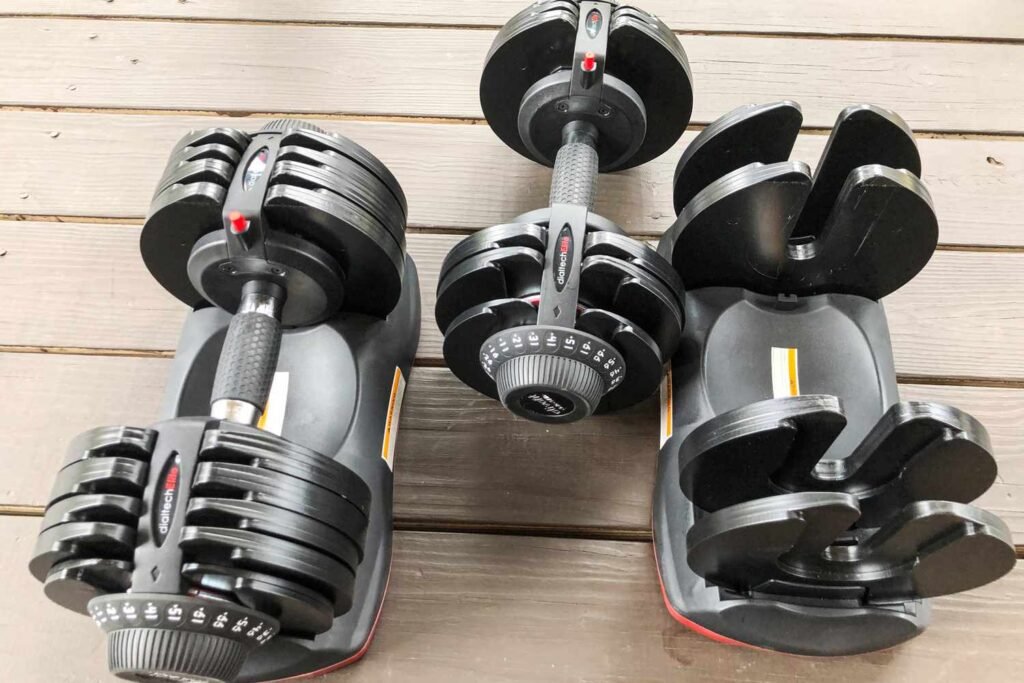
Adjustable dumbbells replace that entire rack with a single pair of handles that can change weight.
Most systems allow users to adjust resistance by:
- adding or removing weight plates
- turning a selector dial
- inserting locking pins.
This flexibility makes them especially attractive for home gyms.
Instead of needing dozens of weights, a beginner can perform many exercises using just one adjustable set.
But the popularity of adjustable dumbbells goes beyond space-saving design.
They are also extremely adaptable for different fitness levels.
For example:
A beginner may start with very light resistance.
A more experienced user can gradually increase the weight over time.
That progression makes them useful for:
- strength training
- muscle endurance
- general fitness routines.
And for people who are building a home gym gradually, adjustable dumbbells can often become the foundation of many workouts.
Why Do So Many Beginners Choose Adjustable Dumbbells Instead of Machines?
When starting a fitness routine, many people assume they need complex equipment.
But in reality, beginners often benefit from simpler tools.
Adjustable dumbbells are popular among beginners because they allow exercises that feel natural and intuitive.
Unlike large machines that guide your movement, dumbbells encourage your body to move more freely.
This can help activate several muscle groups at the same time.
For example, a basic dumbbell squat activates:
- legs
- glutes
- core muscles.
And a simple dumbbell press can engage:
- chest
- shoulders
- stabilizing muscles.
That versatility means beginners can perform a wide variety of exercises without needing multiple machines.
However, freedom of movement also requires proper technique.
Beginners who want to build a safe routine may find it helpful to explore Weekly Home Workout Schedule for Beginners, which explains how to structure workouts without overwhelming the body.
Starting slowly and consistently is usually more effective than trying to do too much too soon.
Are Adjustable Dumbbells Worth It for Home Workouts?
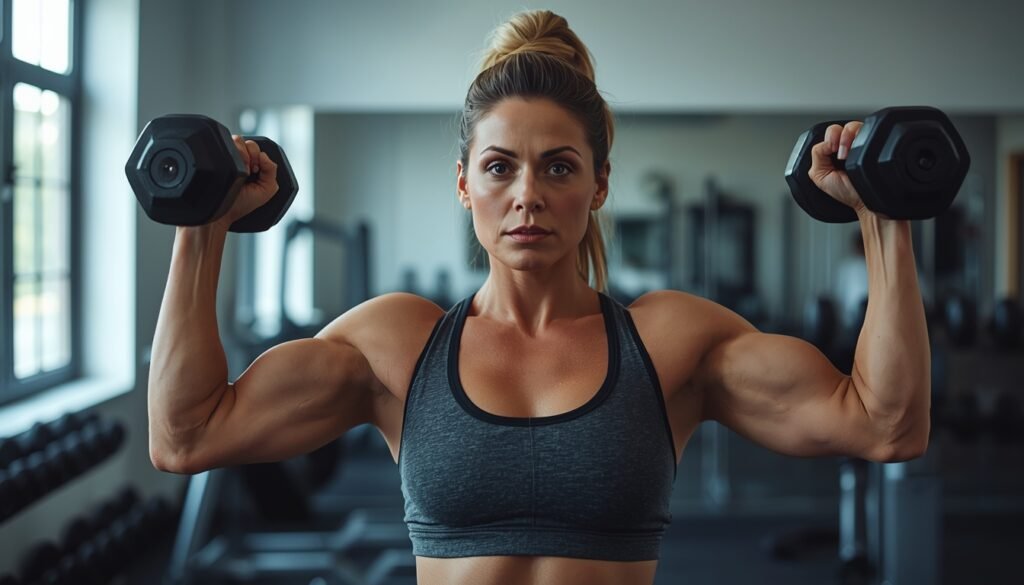
One of the most common questions beginners ask is whether adjustable dumbbells are actually worth the investment.
The answer depends on how someone plans to use them.
For people who exercise occasionally and prefer bodyweight workouts, dumbbells may not be essential.
But for individuals who want to build strength at home, they can be extremely useful.
Here are some of the reasons adjustable dumbbells are often considered worthwhile.
Versatility
A single pair can support dozens of exercises:
- presses
- curls
- squats
- rows
- lunges.
This allows a complete strength routine with minimal equipment.
Progressive resistance
Strength training works best when resistance gradually increases.
Adjustable dumbbells make it easier to increase weight over time without purchasing additional equipment.
Space efficiency
In apartments or smaller homes, adjustable dumbbells can replace large racks of weights.
That’s why many people building compact home gyms prefer them.
For readers curious about whether adjustable dumbbells truly make sense for home workouts, Are Adjustable Dumbbells Worth It for Home Workouts? explores this question in greater depth.
What Are the Real Benefits of Adjustable Dumbbells?
Beyond convenience, adjustable dumbbells offer several fitness benefits.
Understanding these benefits helps beginners decide whether they fit into their training goals.
Strength development
The most obvious benefit is improved strength.
Resistance training challenges muscles, encouraging them to adapt and become stronger over time.
Even relatively light weights can produce meaningful results when used consistently.
Joint support and stability
When used correctly, dumbbells can help strengthen muscles that support the joints.
This is especially important for adults over 50, as maintaining muscle strength can help support mobility and balance.
However, proper technique and gradual progression are essential to avoid excessive strain.
Flexibility in exercise routines
Adjustable dumbbells allow a wide variety of movements.
This flexibility means workouts can remain interesting and adaptable.
Instead of repeating the same routine, users can change exercises to target different muscle groups.
Accessibility for home workouts
Unlike large machines, adjustable dumbbells require minimal space.
They can be stored easily and used in small workout areas.
For many people, that accessibility makes it easier to maintain a consistent exercise routine.
How Should Beginners Start Using Adjustable Dumbbells Safely?
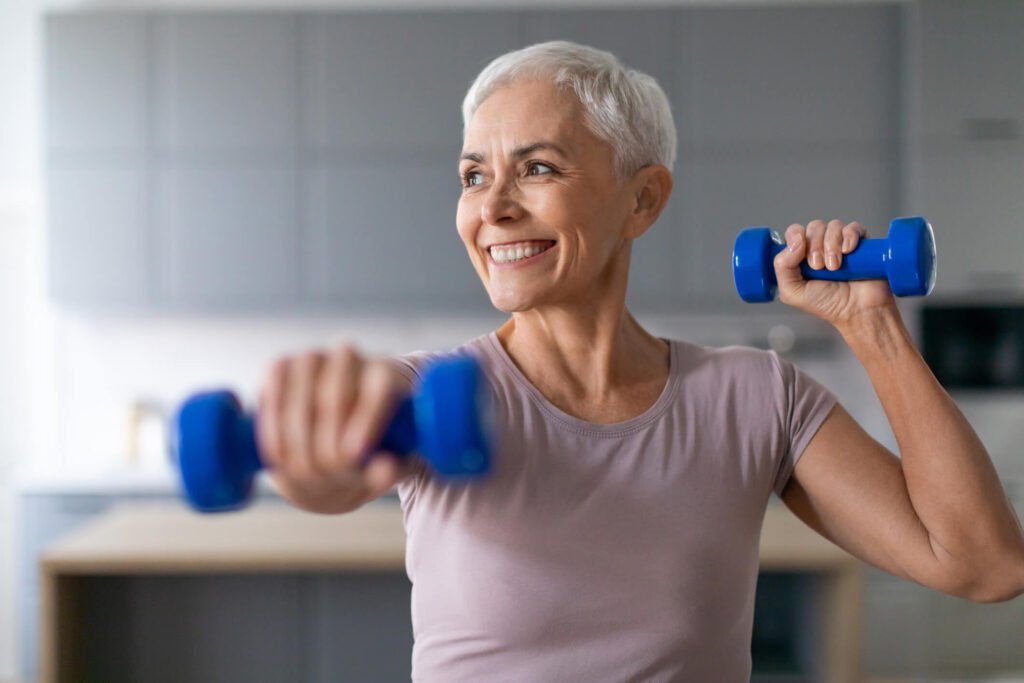
Starting strength training with adjustable dumbbells does not require lifting heavy weights.
In fact, beginners often benefit more from learning proper technique and control before increasing resistance.
Here are several practical guidelines for beginners.
Start with lighter weights than you expect
Many beginners overestimate how much weight they should lift.
Starting lighter allows the body to adapt to new movements while reducing strain on joints.
Light weights also make it easier to focus on proper form.
Learn the basic movement patterns first
Before adding significant weight, beginners should become comfortable with fundamental movements such as:
- squats
- presses
- rows
- curls.
These movements form the foundation of most strength routines.
Focus on controlled repetitions
Slow, controlled movements reduce the risk of injury and help muscles work more effectively.
Rushing through exercises often reduces their effectiveness.
Pay attention to joint comfort
If a movement causes sharp discomfort in the knees, shoulders, or wrists, it is important to stop and adjust.
Reducing the weight or modifying the exercise may help prevent unnecessary strain.
For adults returning to activity after long periods of inactivity, Beginner Exercise Guide for Seniors: What to Do, What to Avoid, and What to Expect (2026) offers helpful guidance for building confidence and avoiding common mistakes.
How Much Weight Should Beginners Start With?
Choosing the right starting weight is one of the most common challenges beginners face.
The goal is not to lift the heaviest weight possible.
Instead, beginners should focus on selecting a weight that allows them to perform exercises with good form and controlled movement.
As a general guideline:
| Experience Level | Suggested Starting Weight |
|---|---|
| Complete beginners | 2–5 lb |
| Beginner with some activity history | 5–10 lb |
| Intermediate beginner | 10–15 lb |
These ranges vary depending on the exercise and individual strength levels.
The most important principle is progression.
Over time, gradually increasing weight allows muscles to continue adapting.
Are Adjustable Dumbbells Safe for Adults Over 50?
One of the most important questions many readers ask is whether adjustable dumbbells are safe for people over 50.
The short answer is yes — when used correctly.
Strength training is widely recognized as an important part of healthy aging. Maintaining muscle strength helps support joints, improve balance, and preserve mobility.
However, the key difference between training at 25 and training after 50 is how the body responds to stress.
With age, several physiological changes occur:
- muscle mass gradually declines
- joint cartilage becomes more sensitive
- recovery time increases
- connective tissues lose some elasticity.
Because of these changes, beginners over 50 should approach strength training with a slightly different mindset.
The goal is not maximum intensity.
Instead, the goal is controlled and consistent strength development.
Adjustable dumbbells are particularly useful in this context because they allow users to gradually increase resistance without jumping to heavier weights too quickly.
For readers who want to understand how strength training interacts with aging muscles, research summarized by Harvard Health Publishing explains that resistance training can help preserve muscle mass and support metabolic health as we age (sugestão de link externo).
This reinforces an important idea: strength training, when done responsibly, can be beneficial at almost any age.
Adjustable dumbbells can be one of the most versatile tools for building strength at home. However, beginners — especially adults over 50 — often have important questions before using them safely.
If you want to understand how adjustable dumbbells actually work, what weight beginners should start with, and whether they are safe for older adults, you may find this complete guide helpful:
Adjustable Dumbbells for Beginners: 3 Popular Brands Compared
What Makes Adjustable Dumbbells a Good Option for Older Beginners?
Many strength machines in gyms are designed for people who already have some training experience.
Adjustable dumbbells, on the other hand, allow beginners to start slowly and adapt exercises to their comfort level.
Several characteristics make them particularly useful for older beginners.
Gradual progression
The biggest advantage of adjustable dumbbells is the ability to increase weight gradually.
For example:
A beginner might start with 3–5 pounds.
After several weeks of practice and improved comfort, that weight may increase slightly.
This gradual progression allows muscles and joints to adapt.
Sudden increases in resistance are one of the main reasons beginners experience joint discomfort.
Controlled movement
Unlike fast or explosive exercises, most dumbbell movements can be performed slowly.
Slow repetitions help reduce joint strain while improving muscle engagement.
This controlled pace is especially beneficial for people returning to exercise after long periods of inactivity.
Adaptability to different exercises
Dumbbells can be used for many movement patterns:
- pushing movements
- pulling movements
- lower body exercises
- core engagement.
This flexibility makes them an efficient tool for building balanced strength.
Adjustable Dumbbells vs Regular Dumbbells: What’s the Difference?
Many beginners wonder whether adjustable dumbbells are actually better than traditional dumbbells.
The answer depends on the situation.
Let’s compare them.
Space and convenience
One of the main advantages of adjustable dumbbells is space efficiency.
Instead of owning multiple pairs of weights, users can adjust resistance using a single set.
This is particularly useful in small apartments or compact workout spaces.
Traditional dumbbells require racks or storage areas.
Speed of weight changes
Traditional dumbbells allow immediate switching between weights.
Adjustable dumbbells may require a few seconds to change plates or settings.
For beginners performing slower workouts, this difference is usually minimal.
Stability
High-quality adjustable dumbbells are generally stable when properly locked.
However, cheaper models may feel slightly less solid compared to fixed dumbbells.
That’s why choosing a well-designed adjustable set is important.
Cost efficiency
Purchasing a full rack of traditional dumbbells can be expensive.
Adjustable sets often provide multiple weight options at a lower total cost.
Quick comparison
| Feature | Adjustable Dumbbells | Traditional Dumbbells |
|---|---|---|
| Space required | Very small | Large rack |
| Weight variety | High | Requires many pairs |
| Cost efficiency | Usually better | More expensive |
| Weight switching | Slower | Instant |
For beginners building a compact home gym, adjustable dumbbells often offer the best balance between flexibility and space efficiency.
What Mistakes Do Beginners Often Make When Using Dumbbells?
Even though dumbbells are relatively simple tools, beginners sometimes make mistakes that can slow progress or increase the risk of discomfort.
Understanding these mistakes can help create a safer training routine.
Starting with too much weight
Many beginners assume heavier weights produce faster results.
In reality, starting too heavy often leads to poor technique.
Poor form can place unnecessary strain on the shoulders, wrists, and lower back.
Starting lighter allows users to focus on movement quality.
Ignoring posture
Exercises such as dumbbell rows, presses, and curls require proper posture.
Leaning too far forward or arching the back excessively may increase strain on the spine.
Maintaining a neutral spine and stable stance helps distribute effort safely.
Training too frequently at the beginning
Muscles need time to recover after strength training.
Beginners sometimes train every day, thinking more sessions will accelerate results.
However, adequate recovery allows muscles to rebuild and adapt.
A balanced routine usually includes rest days between strength sessions.
Neglecting warm-ups
A short warm-up prepares muscles and joints for exercise.
Simple movements such as light bodyweight squats, arm circles, or gentle stretching can improve comfort before lifting weights.
How Often Should Beginners Train With Adjustable Dumbbells?
Another common question is training frequency.
Beginners often wonder whether they should train daily or only a few times per week.
In most cases, beginners benefit from two to three strength sessions per week.
This allows the body to adapt while maintaining sufficient recovery time.
For example:
| Day | Activity |
|---|---|
| Monday | Dumbbell strength session |
| Tuesday | Light activity or walking |
| Wednesday | Rest or mobility work |
| Thursday | Dumbbell session |
| Friday | Light movement |
| Weekend | Optional light session or rest |
This balanced structure helps maintain consistency without overwhelming the body.
Readers exploring ways to structure their workouts may find helpful ideas in Rowing Machine Benefits: Why So Many Beginners Are Choosing It for Home Workouts, which explains how low-impact cardio can complement strength training.
Combining light cardio and resistance training can support overall fitness.
Beginner Dumbbell Training Progression (Example Plan)
For readers starting their first strength routine at home, gradual progression is essential.
The table below shows a simple example of how beginners might structure early sessions.
| Phase | Workout Time | Suggested Weight Range |
|---|---|---|
| Week 1–2 | 10 minutes | 2–5 lb |
| Week 3–4 | 15 minutes | 5–8 lb |
| Week 5–6 | 20 minutes | 8–12 lb |
This progression focuses on comfort and control rather than intensity.
Gradually increasing the duration of workouts often produces better results than immediately increasing weight.
Important safety reminder
⚠ If you experience sharp joint pain, unusual discomfort in the shoulders or knees, or excessive fatigue, reduce the weight or shorten the workout duration.
In some cases, stopping and allowing additional recovery time is the best approach.
Listening to your body is an important part of safe training, especially for beginners returning to activity after long periods of inactivity.
What Exercises Can Beginners Safely Do With Adjustable Dumbbells?
One of the biggest advantages of adjustable dumbbells is their versatility.
A single pair of dumbbells can support dozens of different movements that target multiple muscle groups.
For beginners, however, the most important thing is not performing many exercises — but learning a few foundational movements that train the body in a balanced way.
These movements help develop:
- strength
- coordination
- stability
- mobility.
Below are several beginner-friendly exercises that can be performed safely at home.
Dumbbell Squats
Squats are one of the most fundamental strength exercises.
Holding light dumbbells at your sides while performing squats helps engage:
- quadriceps
- glutes
- core muscles.
For beginners over 50, this movement can also help support knee stability and lower-body strength.
The key is to move slowly and maintain control during the entire motion.
Dumbbell Rows
Rows are excellent for strengthening the upper back.
A strong back supports better posture and helps balance the muscles used in pushing movements.
During a dumbbell row, beginners should focus on:
- keeping the spine neutral
- pulling the weight toward the torso
- avoiding sudden jerking motions.
Dumbbell Shoulder Press
This exercise strengthens the shoulders and upper arms.
Beginners should start with light weights and controlled repetitions.
Because shoulder joints are sensitive, slow and steady movement helps reduce strain.
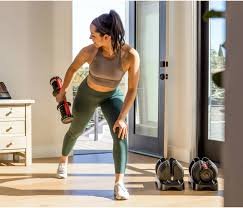
Dumbbell Deadlifts
Deadlifts strengthen the posterior chain — the muscles along the back of the body.
These include:
- hamstrings
- glutes
- lower back muscles.
When performed with light dumbbells and proper technique, deadlifts can help reinforce safe lifting mechanics for everyday movements.
How Can Adjustable Dumbbells Support Long-Term Strength and Mobility?
Strength training is not only about building muscle.
It also plays an important role in maintaining everyday functionality.
For adults over 50, maintaining strength can help support activities such as:
- lifting groceries
- climbing stairs
- maintaining balance
- protecting joints during movement.
Adjustable dumbbells allow individuals to gradually build strength without the need for complex gym equipment.
Because resistance can be adjusted slowly over time, the body has the opportunity to adapt.
Consistency is far more important than intensity.
Even short workouts performed regularly can produce meaningful improvements in strength and mobility.
How Should Beginners Combine Dumbbell Training With Other Exercises?
Strength training works best when combined with other types of activity.
Many beginners benefit from including light cardio exercises alongside resistance training.
For example:
- walking
- cycling
- rowing machines
- mobility exercises.
This combination helps improve both muscular strength and cardiovascular health.
Readers interested in low-impact cardio options may also explore Benefits of Treadmill for Home Use: Why It’s One of the Easiest Ways to Stay Active, which explains how walking workouts can complement strength routines.
Balancing different types of movement creates a more complete fitness routine.
Beginner-Friendly Weekly Training Structure
For beginners starting with adjustable dumbbells, a balanced weekly structure can make workouts easier to maintain.
Below is an example of a simple beginner schedule.
| Day | Activity |
|---|---|
| Monday | Dumbbell strength training |
| Tuesday | Light walking or mobility |
| Wednesday | Rest or stretching |
| Thursday | Dumbbell strength training |
| Friday | Light cardio activity |
| Weekend | Optional light session or rest |
This structure allows muscles to recover while maintaining consistent movement throughout the week.
Consistency is one of the most important factors in building long-term fitness habits.
Training Progression Example for Beginners Over 50
Gradual progression helps reduce injury risk and allows the body to adapt comfortably.
The table below provides an example progression model.
| Phase | Workout Duration | Suggested Weight |
|---|---|---|
| Week 1–2 | 10 minutes | 2–5 lb |
| Week 3–4 | 15 minutes | 5–8 lb |
| Week 5–6 | 20 minutes | 8–12 lb |
| Week 7+ | 20–25 minutes | 10–15 lb |
This approach emphasizes gradual increases in both time and resistance.
Important safety note
⚠ If you notice unusual joint pain, sharp discomfort, or excessive fatigue, reduce the weight or shorten the workout session.
In some situations, taking an extra rest day may help the body recover properly.
Listening to your body is essential for long-term consistency.
Can Adjustable Dumbbells Replace a Full Gym?
Many beginners wonder whether adjustable dumbbells alone are enough for a home workout routine.
While dumbbells cannot replicate every gym machine, they can support a surprisingly wide variety of exercises.
For example, dumbbells allow training of:
- chest
- shoulders
- back
- arms
- legs
- core muscles.
With the right exercises, beginners can perform a full-body workout using only a pair of adjustable dumbbells.
However, combining them with other equipment — such as resistance bands or bodyweight exercises — can further expand training options.
FAQ — Adjustable Dumbbells for Home Workouts
Are adjustable dumbbells good for beginners?
Yes. Adjustable dumbbells are often considered beginner-friendly because they allow gradual weight increases and support many different exercises.
What weight should beginners start with?
Many beginners start with weights between 2–10 pounds, depending on the exercise and individual strength level.
Starting lighter allows time to learn proper technique.
Are adjustable dumbbells safe for adults over 50?
When used with proper technique and moderate weight, adjustable dumbbells can be a safe way to build strength and support joint stability.
However, individuals with health conditions should consult a healthcare professional before beginning a new exercise routine.
Are adjustable dumbbells better than regular dumbbells?
Adjustable dumbbells are often more space-efficient and versatile for home gyms, while traditional dumbbells allow faster weight changes.
The best option depends on available space and personal preference.
How often should beginners train with dumbbells?
Most beginners benefit from two to three strength sessions per week, with rest days between workouts to allow recovery.
Can adjustable dumbbells help build muscle?
Yes. When used consistently with progressive resistance, adjustable dumbbells can help build muscle strength over time.
Do adjustable dumbbells save space?
Yes. Adjustable dumbbells replace multiple sets of fixed weights, making them ideal for small workout spaces.
Final Thoughts
Adjustable dumbbells have become one of the most popular tools in home fitness for a reason.
They offer a combination of versatility, compact design, and progressive resistance that works well for beginners and experienced users alike.
For individuals starting their fitness journey — especially adults over 50 — they can provide a flexible and accessible way to begin strength training.
The most important principle is consistency.
Starting slowly, focusing on proper technique, and gradually increasing resistance can help build strength safely over time.
With patience and a balanced approach, adjustable dumbbells can become a valuable part of a long-term