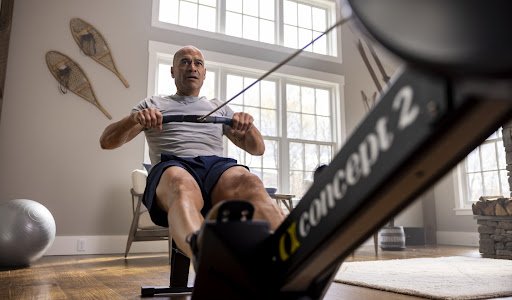
Weak legs after 50 — is this normal, or is something wrong?
Why do the legs start to feel weaker with age?
Is it still possible to build strength after 50, 60, or even 70?
And can you strengthen your legs at home without going to the gym?
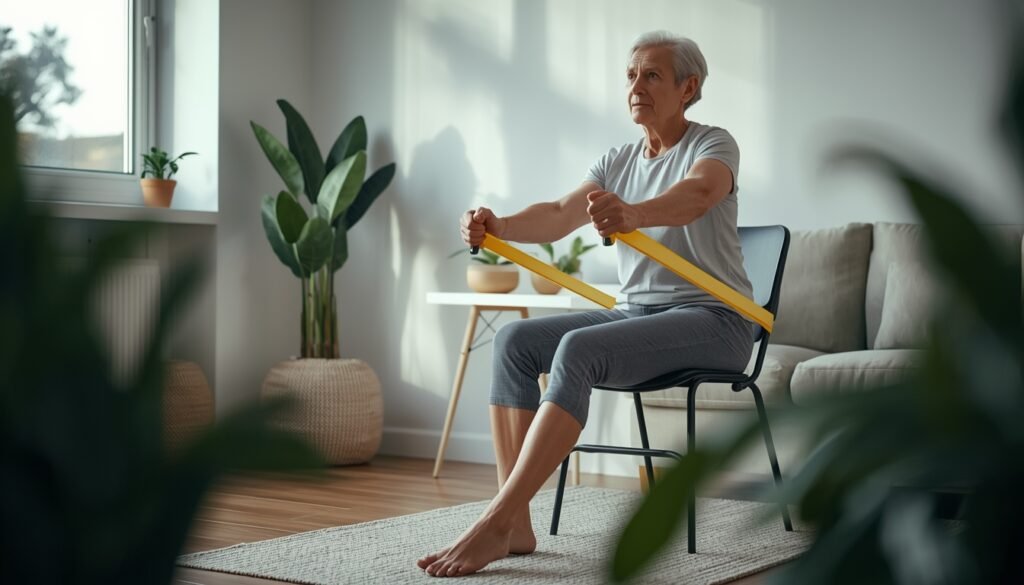
These are very common questions, and the truth is that many people notice their legs getting weaker as they get older. They feel less stable when walking, climbing stairs becomes harder, getting up from a chair takes more effort, and balance is not the same as before.
The good news is this:
Weak legs after 50 are very common, but they are not something you have to accept.
In many cases, leg strength can improve a lot with simple exercises done at home.
You don’t need a gym.
You don’t need heavy weights.
You don’t need complicated workouts.
What you really need is:
- Simple exercises
- Consistency
- Low-impact movements
- Basic equipment (sometimes not even that)
- Patience
In this guide, you’ll learn:
- Why legs get weaker after 50
- Signs of weak legs
- Why leg strength is important for balance and knee health
- Simple equipment that can help
- Exercises you can do at home
- A simple weekly routine
If your legs feel weaker than before, this article will help you understand where to start.
Is It Normal for Legs to Get Weaker After 50?
Yes, this is actually very common.
After around age 40–50, the body naturally starts to lose muscle mass. This process is called muscle loss with aging, and it happens to everyone to some degree.
If a person becomes sedentary, this muscle loss happens faster.
If a person stays active and does strength exercises, this muscle loss happens much slower.
That’s why two people of the same age can be very different:
- One has strong legs and walks easily
- The other feels unstable and tired when walking
The difference is usually muscle strength and activity level, not just age.
Weak legs are not only about strength — they affect:
- Balance
- Walking speed
- Ability to climb stairs
- Ability to stand up
- Risk of falling
- Knee pain
- Lower back pain
- Independence
This is why strengthening the legs is one of the most important things people can do after 50.
If you are just starting to exercise again, you may also want to read
How to Start Exercising at Home After 50: A Safe Beginner’s Guide
Why Do Legs Get Weaker With Age?
There are several reasons why leg strength decreases with age.
1. Muscle loss
As we age, the body naturally loses muscle mass if we don’t use the muscles regularly.
2. Less physical activity
Many people become more sedentary due to:
- Work
- Retirement
- Pain
- Fear of injury
- Lack of time
- Lack of motivation
Less movement = weaker muscles.
3. Joint pain
Knee pain or back pain often makes people move less, and moving less makes muscles weaker. This creates a cycle:
Pain → less movement → weaker muscles → more pain
4. Balance and coordination changes
With age, balance and coordination can also change, making people less confident to move and exercise.
5. Fear of falling
Many people become afraid of falling, so they move less, and this makes the legs even weaker.
This is why strengthening the legs is not just about muscles — it is about safety, balance, and independence.
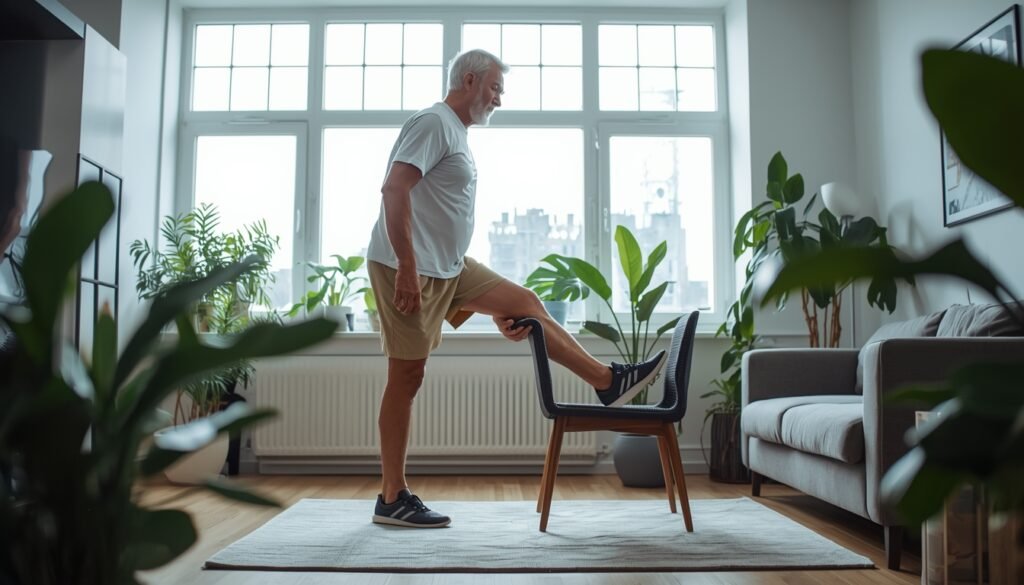
What Are the Signs of Weak Legs?
Many people don’t realize their legs are getting weaker until daily activities become harder.
Common signs of weak legs include:
- Difficulty climbing stairs
- Difficulty standing up from a chair
- Feeling unstable when walking
- Needing to hold furniture when walking
- Getting tired quickly when walking
- Knee pain when going up or down stairs
- Feeling that the legs are “heavy”
- Fear of falling
- Loss of balance
- Walking slower than before
If someone experiences several of these signs, it is usually a good idea to start strengthening the legs.
Weak legs are also often related to knee discomfort. If knee pain is also a problem, you may find this article helpful:
10 Low-Impact Home Exercises for Beginners Over 50 With Knee Pain
Do Weak Legs Increase the Risk of Falling?
Yes, very much.
One of the biggest reasons older adults fall is weak leg muscles and poor balance, not just slippery floors or accidents.
Strong legs help with:
- Balance
- Stability
- Reaction time
- Walking safely
- Climbing stairs
- Standing up
- Avoiding falls
This is why many health organizations recommend strength training for legs as one of the most important types of exercise after 50.
Strong legs mean:
- More independence
- More confidence walking
- Less fear of falling
- Better mobility
- Better quality of life
According to the Mayo Clinic, regular aerobic exercise can help improve heart health, circulation, blood pressure, and overall health, even when done at moderate intensity for short periods of time. This is why simple exercises like walking, cycling, and light home workouts can already make a big difference over time.
Does Strengthening the Legs Help With Knee and Back Pain?
In many cases, yes.
Weak legs often mean:
- Knees work harder than they should
- Lower back compensates for weak legs
- Posture becomes worse
- Walking mechanics change
- More pressure on joints
Stronger leg muscles help:
- Support the knees
- Reduce pressure on the joints
- Improve posture
- Improve walking mechanics
- Reduce risk of injury
- Improve balance
- Improve mobility
This is why many people with knee discomfort are encouraged to strengthen the legs with low-impact exercises.
If you also experience knee discomfort when exercising, choosing the right equipment can make a big difference. Low-impact equipment like resistance bands, exercise bikes, and ellipticals can help you stay active without putting too much stress on your knees.
You can read this guide to learn more about safe equipment and exercises:
How to Exercise With Knee Pain: Simple Equipment That Can Help You Stay Active at Home

Can You Strengthen Your Legs at Home Without a Gym?
Yes, absolutely.
Many people think they need:
- A gym
- Heavy weights
- Machines
- Personal trainer
- Expensive equipment
But in reality, you can strengthen your legs very effectively at home using:
- A chair
- Resistance bands
- Light dumbbells
- A step
- An exercise mat
- A stationary bike
- An elliptical
- Bodyweight exercises
For example, cardio equipment like bikes and ellipticals are very useful because they strengthen the legs with low impact. If you live in an apartment, you may find this helpful:
Indoor Exercise Bike for Apartment: Can You Really Workout Without Noise Complaints?
You can also learn more about low-impact cardio equipment here:
Elliptical Machine Benefits: What It’s For, Muscles Worked, Weight Loss & More
And machines like rowing machines also work the legs and can be useful for beginners:
Rowing Machine Benefits: Why So Many Beginners Are Choosing It for Home Workouts
If you want to see an example of a beginner-friendly bike, you can also check:
Wenoker Exercise Bike Review: The Best Quiet Magnetic Bike for Small Apartments
What Simple Equipment Can Help Strengthen Your Legs at Home?
You don’t need a full gym to strengthen your legs. In fact, some of the most effective tools are very simple and inexpensive.
Below is a simple comparison table showing equipment that can help strengthen the legs safely at home.
Comparison Table – Simple Equipment for Leg Strength
| Equipment | What It Helps With | Difficulty | Cost |
|---|---|---|---|
| Chair | Squats, sit-to-stand | Very easy | Free |
| Resistance bands | Thighs and glutes | Easy | Low |
| Light dumbbells | Leg strength | Easy | Low |
| Step or stairs | Leg strength and balance | Easy | Low |
| Exercise mat | Floor exercises | Easy | Low |
| Exercise bike | Legs with low impact | Easy | Medium |
| Elliptical | Legs and cardio | Medium | Higher |
| Rowing machine | Legs and full body | Medium | Higher |
As you can see, you can start with very simple equipment like a chair, resistance bands, and light dumbbells.
If you want to build a small home gym later, you can also read
Is It Possible to Build a Home Gym on a Budget? A Beginner’s Practical Guide
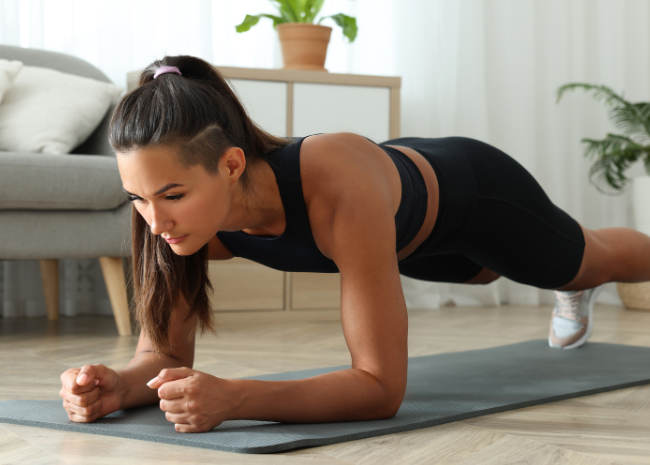
What Are the Best Exercises to Strengthen Your Legs at Home?
You don’t need many exercises. You just need the right ones and do them consistently.
Below are some of the best beginner-friendly exercises for leg strength.
1. Sit-to-Stand (Chair Squat)
This is one of the best exercises for beginners.
How to do it:
- Sit on a chair
- Feet flat on the floor
- Lean slightly forward
- Stand up slowly
- Sit down slowly
- Repeat 8–12 times
This exercise strengthens:
- Quadriceps
- Glutes
- Hamstrings
It also improves balance and daily movements.
2. Step-Ups
Very good for leg strength and balance.
How to do it:
- Use a low step or stair
- Step up slowly
- Step down slowly
- Repeat 8–10 times each leg
3. Calf Raises
Important for walking and balance.
How to do it:
- Hold a chair
- Raise your heels
- Stand on your toes
- Lower slowly
- Repeat 10–12 times
4. Leg Extensions (Seated)
Good for strengthening the front of the thigh.
How to do it:
- Sit on a chair
- Extend one leg
- Hold for 2 seconds
- Lower slowly
- Repeat 10 times each leg
You can use resistance bands for more resistance.
5. Glute Bridge
Very important for hips and lower back support.
How to do it:
- Lie on a mat
- Bend knees
- Lift hips slowly
- Hold for 2 seconds
- Lower slowly
- Repeat 10–12 times

Example Beginner Leg Workout Routine at Home
Here is a simple routine for beginners:
Beginner Routine Table
| Exercise | Repetitions |
|---|---|
| Sit-to-Stand | 10 reps |
| Step-Ups | 10 each leg |
| Calf Raises | 12 reps |
| Leg Extensions | 10 each leg |
| Glute Bridge | 12 reps |
| Stretching | 5 minutes |
You can do this routine 2 to 3 times per week.
How Many Times Per Week Should You Train Legs After 50?
For beginners, a good starting point is:
- 2 to 3 times per week
- Rest days between workouts
- Start slowly
- Focus on correct movement
- Increase repetitions gradually
Consistency is more important than intensity.
How Long Does It Take to Strengthen Weak Legs?
This is a very common question.
Most people start noticing improvements in:
- Strength
- Balance
- Walking
- Getting up from chairs
- Climbing stairs
After about 4 to 8 weeks of consistent exercise.
But the key is:
Consistency is more important than doing a lot in one day.
Small workouts done regularly are much more effective than one hard workout once in a while.
Common Mistakes When Trying to Strengthen Legs After 50
Many beginners make these mistakes:
- Doing too much too fast
- Skipping warm-up
- Not exercising consistently
- Only walking and not doing strength exercises
- Using very heavy weights too soon
- Ignoring balance exercises
- Stopping because of mild discomfort
- Not stretching
- Training every day without rest
- Being afraid to start
The biggest mistake is usually not starting at all.
Conclusion: Stronger Legs Mean More Independence and Safety
Weak legs after 50 are very common, but they are not something you have to accept as permanent.
Stronger legs help with:
- Walking
- Balance
- Stairs
- Standing up
- Knee health
- Back health
- Preventing falls
- Independence
- Confidence
- Quality of life
You don’t need a gym.
You don’t need expensive equipment.
You don’t need complicated workouts.
You just need:
- Simple exercises
- Consistency
- Patience
- Safe movements
- Low-impact training
Even small improvements in leg strength can make a big difference in daily life.
FAQ – Weak Legs After 50
Is it normal to lose leg strength after 50?
Yes, muscle loss with age is common, especially if a person is sedentary. However, strength can be improved with exercise.
What is the best exercise for weak legs?
Some of the best exercises include:
- Sit-to-stand
- Step-ups
- Calf raises
- Leg extensions
- Glute bridges
Can walking strengthen weak legs?
Walking helps, but walking alone is usually not enough. Strength exercises are also important.
How long does it take to strengthen weak legs?
Most people notice improvements after 4–8 weeks of consistent exercise.
Do I need a gym to strengthen my legs?
No. Many effective exercises can be done at home with simple equipment.
How many times per week should I train legs?
Most beginners should start with 2–3 times per week.