Read This Before You Think You’re Too Old, Too Tired, or Too Out of Shape
10 Simple Exercises Beginners and Adults Over 50: Most people don’t avoid exercise because they are lazy.
They avoid exercise because they are tired, afraid of getting hurt, embarrassed to start, or simply don’t know where to begin.
If you are over 50, or if you’ve been sedentary for years, starting to exercise can feel intimidating. Many people think they need a gym, expensive equipment, or intense workouts to see results. That’s not true.
In reality, the best exercises for beginners and adults over 50 are simple, low-impact movements that can be done at home, safely, and consistently.
This guide will show you 10 simple exercises you can do at home, even if:
- You haven’t exercised in years
- You have knee pain
- You have back pain
- You live in an apartment
- You are overweight
- You get tired easily
- You are starting from zero
The goal is not to become an athlete.
The goal is to move more, feel better, reduce pain, improve circulation, and build a routine you can maintain for years.
If you start slowly and stay consistent, these simple exercises can change your energy, your mobility, your sleep, and even your mood.
If you are just starting your fitness journey, you may also want to read Beginner Exercise Guide for Seniors (link interno), which explains how to start safely and build confidence before increasing intensity.
Is Walking at Home a Good Exercise for Beginners?
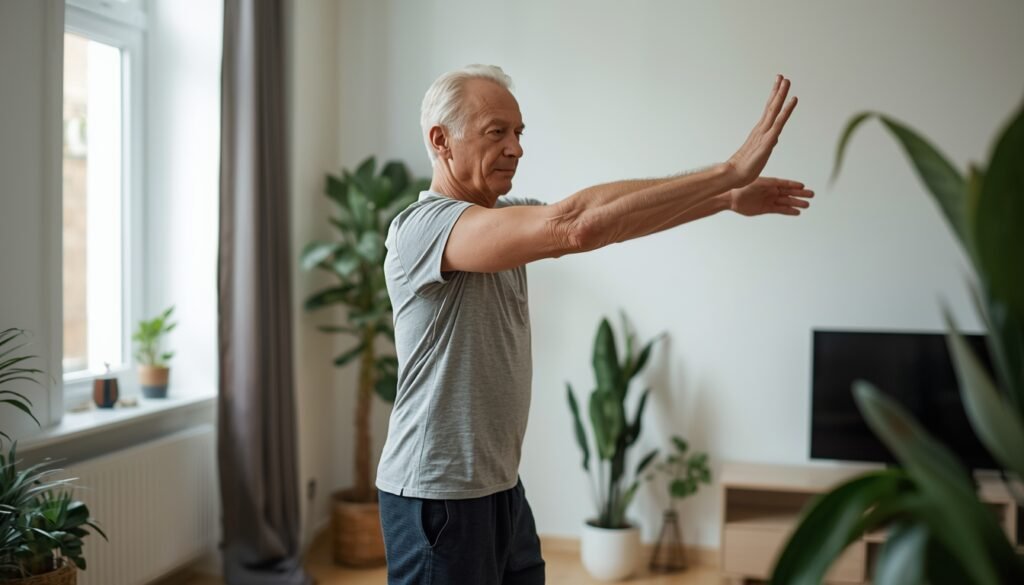
Yes. Walking is probably the most underrated exercise in the world.
People often think walking is “too easy” to make a difference. But for beginners and adults over 50, walking can:
- Improve heart health
- Improve circulation
- Reduce joint stiffness
- Help control blood sugar
- Help with weight control
- Improve mood and sleep
- Increase energy levels
You don’t need a treadmill.
You don’t need a park.
You don’t need special clothes.
You can simply:
- Walk inside your house
- Walk in the hallway
- Walk around the block
- Walk slowly at first
- Walk while watching TV
If you walk 10 to 15 minutes per day, you are already doing more than most sedentary people.
If walking is difficult at first, start with 5 minutes. What matters is consistency, not intensity.
If you want to understand more about safe exercise time, you can also read Safe Exercise Minutes Over 50.
Are Chair Sit-to-Stand Exercises Effective?
This is one of the best exercises for beginners, seniors, and people with weak legs.
The movement is simple:
- Sit in a chair
- Stand up slowly
- Sit down slowly again
- Repeat
That’s it.
But this simple movement trains:
- Legs
- Glutes
- Core
- Balance
- Mobility
- Independence
Many people don’t realize this, but being able to stand up from a chair easily is one of the biggest indicators of mobility and independence as we age.
If this exercise feels difficult, that’s not a problem.
That just means you need it even more.
Start with:
- 5 repetitions
- Rest
- Another 5 repetitions
Over time, try to reach:
- 10 repetitions
- Then 15 repetitions
This exercise alone can significantly improve leg strength and balance.
Are Wall Push-Ups Good for Beginners and Adults Over 50?
Wall push-ups are a great way to build upper body strength without putting too much pressure on your shoulders or wrists.
Instead of doing push-ups on the floor, you:
- Stand facing a wall
- Place your hands on the wall
- Bend your arms slowly
- Push yourself back
This exercise works:
- Chest
- Arms
- Shoulders
- Core
And it is much safer for beginners than floor push-ups.
Start with:
- 8 repetitions
- Rest
- Repeat 2 or 3 times
This exercise is especially good for people who:
- Spend a lot of time sitting
- Have weak arms
- Have difficulty lifting objects
- Want to improve posture
Are Seated Leg Raises Good for Weak Legs?
Yes, especially for beginners, seniors, and people with knee pain.
How to do it:
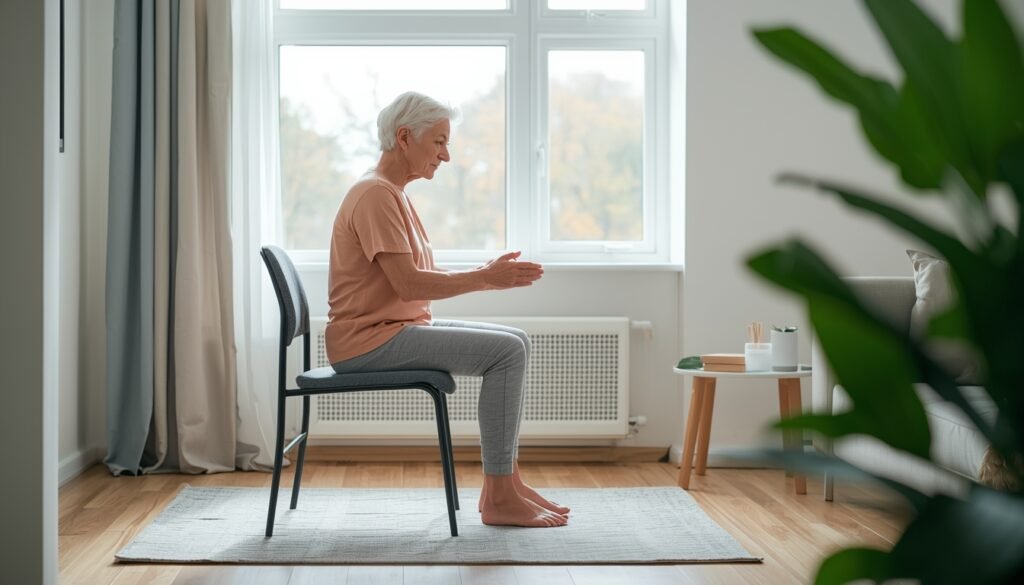
- Sit on a chair
- Extend one leg slowly
- Hold for a few seconds
- Lower slowly
- Repeat with the other leg
This exercise strengthens:
- Quadriceps
- Knees
- Hip muscles
- Circulation in the legs
It is very low impact and very safe.
If you have knee pain, this exercise can actually help strengthen the muscles that protect the knee joint.
Start with:
- 10 repetitions per leg
- Slow movement
- Controlled movement
Never rush this exercise.
Quick Comparison – Best Exercises for Absolute Beginners
| Exercise | Difficulty | Impact | Good for Over 50 | Space Needed |
|---|---|---|---|---|
| Walking | Very Easy | Very Low | Excellent | Very Small |
| Chair Sit-to-Stand | Easy | Low | Excellent | Small |
| Wall Push-Ups | Easy | Low | Very Good | Very Small |
| Seated Leg Raises | Very Easy | Very Low | Excellent | Very Small |
These exercises are perfect for:
- Beginners
- Sedentary people
- Adults over 50
- People with joint pain
- Apartment living
- Home workouts
If you are starting from zero, these are the safest exercises to begin with.
You may also want to read Start Exercising at Home After Sedentary Lifestyle, which explains how to build a routine from zero without getting injured.
Can Step-Ups Improve Strength and Balance?
Yes, and this is one of the most functional exercises you can do.
Step-ups simulate:
- Climbing stairs
- Getting into a car
- Walking uphill
- Everyday movements
How to do it:
- Use a step
- Use a low stair
- Use a sturdy platform
- Step up slowly
- Step down slowly
This exercise improves:
- Leg strength
- Balance
- Coordination
- Stability
- Confidence when walking
Start very slowly and use support if necessary.
Are Resistance Band Exercises Good for Beginners?
Resistance bands are one of the best tools for home workouts because they are:
- Cheap
- Light
- Easy to store
- Low impact
- Safe
- Very effective
With resistance bands you can train:
- Arms
- Back
- Shoulders
- Legs
- Core
They are especially good for beginners because they allow controlled movement without heavy weights.
Many people who don’t feel comfortable with dumbbells start with resistance bands first.
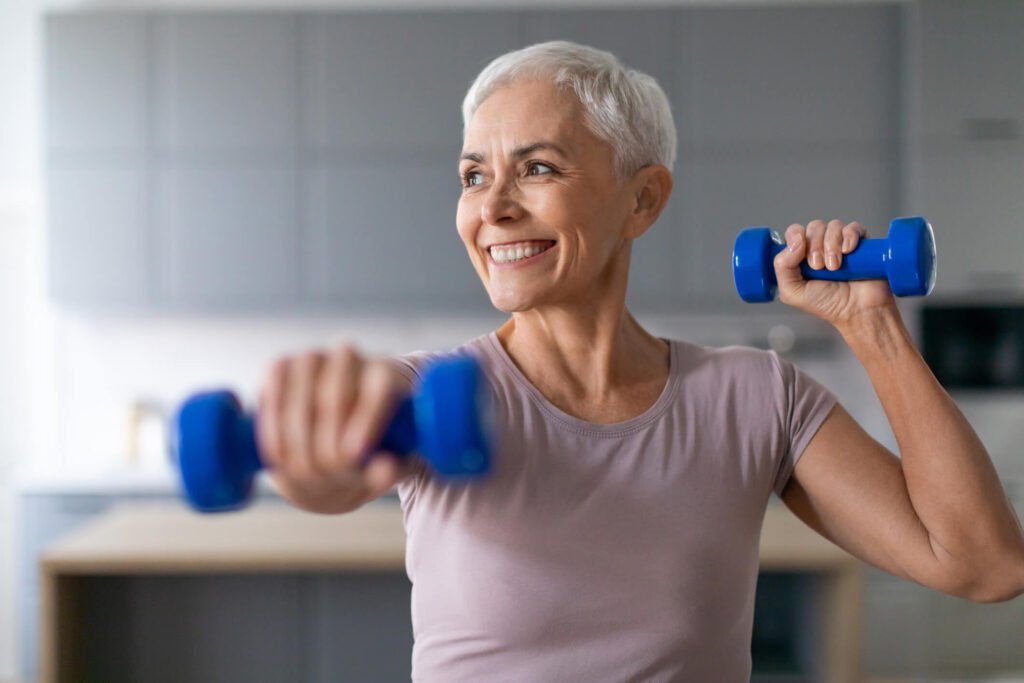
Can Light Dumbbells Help Build Strength Safely?
Yes, but the key word is light.
You don’t need heavy weights to benefit from strength training, especially if you are a beginner or over 50.
Light dumbbells can:
- Improve bone density
- Improve muscle strength
- Improve posture
- Reduce injury risk
- Make daily tasks easier
- Improve metabolism
Even 2–5 lb dumbbells can be very effective for beginners.
If you are interested in simple equipment for home workouts, you might also like Are Adjustable Dumbbells Worth It for Home Workouts?.
Comparison Box – Home Exercise Equipment for Beginners
| Equipment | Cost | Noise | Space | Beginner Friendly |
|---|---|---|---|---|
| Resistance Bands | Very Low | None | Very Small | Excellent |
| Light Dumbbells | Low | None | Small | Very Good |
| Walking Pad | Medium | Low | Small | Excellent |
| Exercise Bike | Medium | Very Low | Medium | Excellent |
If you live in an apartment, exercise bikes are usually one of the quietest options.
You can read more in Indoor Exercise Bike for Apartment.
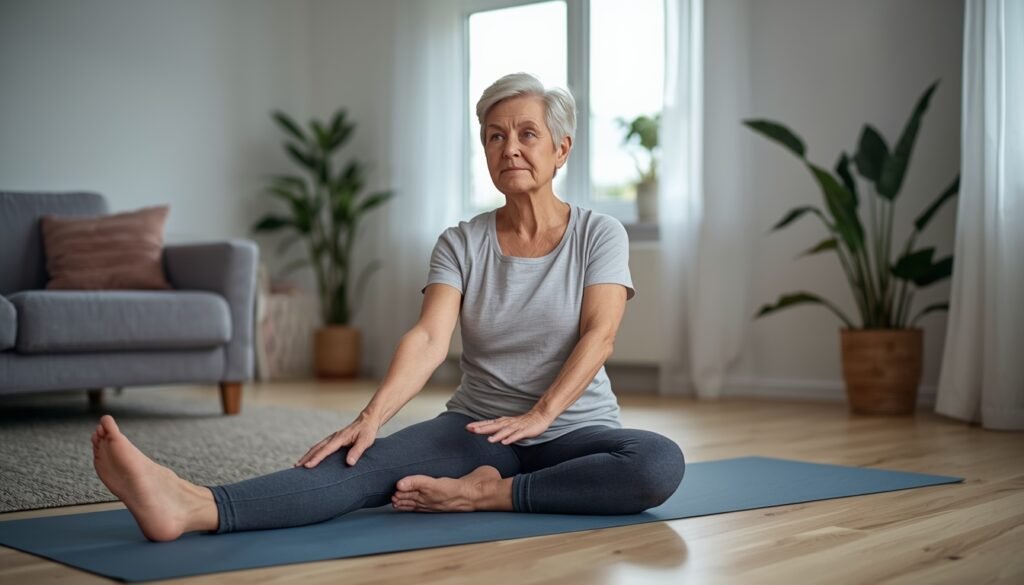
Is Stretching Important for Beginners and Adults Over 50?
Stretching is one of the most ignored parts of exercise, especially for beginners. Many people think stretching is optional, but for adults over 50, stretching is extremely important.
As we get older, muscles and joints become stiffer. This can lead to:
- Back pain
- Knee pain
- Shoulder stiffness
- Poor posture
- Reduced mobility
- Higher injury risk
Stretching helps:
- Improve mobility
- Reduce stiffness
- Improve posture
- Reduce muscle tension
- Improve circulation
- Prevent injuries
You don’t need complicated stretching routines. Simple stretches like:
- Reaching arms overhead
- Touching your knees or shins
- Gentle neck movements
- Gentle shoulder rotations
- Calf stretches against a wall
Even 5 minutes of stretching per day can make a big difference over time.
Stretching is especially important if you spend a lot of time sitting, which is very common today.
Are Balance Exercises Important After 50?
Yes. Balance exercises become very important as we age, but most people never train balance.
Balance training helps:
- Prevent falls
- Improve stability
- Improve coordination
- Strengthen stabilizing muscles
- Increase confidence when walking
- Improve posture
Simple balance exercises you can do at home:
- Standing on one leg for 10 seconds
- Walking slowly in a straight line
- Holding a chair and lifting one foot
- Heel-to-toe walking
- Side leg raises
Balance exercises are simple, but extremely important for long-term mobility and independence.
Many people focus only on cardio and forget balance and strength, but all three are important:
- Cardio
- Strength
- Balance
Is Stationary Cycling a Good Home Exercise for Beginners?
Stationary cycling is one of the best home exercises for beginners and adults over 50 because it is:
- Low impact
- Easy on the knees
- Good for the heart
- Good for weight control
- Quiet (good for apartments)
- Easy to control intensity
- Safe for beginners
Many people who cannot run or jump can still cycle comfortably.
Cycling can help:
- Improve cardiovascular health
- Improve circulation
- Strengthen legs
- Improve endurance
- Reduce joint stiffness
- Help with weight control
How Long Should Beginners Exercise Per Day at Home?
This is one of the most common questions.
Beginners do not need to exercise for one hour per day.
A good starting point is:
- 10 minutes per day
- Then 15 minutes
- Then 20 minutes
- Then 30 minutes
What matters most is consistency, not duration.
A person who exercises:
- 15 minutes every day
Will see more results than someone who exercises: - 2 hours once per week
For beginners and adults over 50, a good goal is:
20 to 30 minutes per day, 4 to 5 days per week
According to the Mayo Clinic, regular aerobic exercise can help improve heart health, circulation, blood pressure, and overall health, even when done at moderate intensity for short periods of time. This is why simple exercises like walking, cycling, and light home workouts can already make a big difference over time.
How Many Days Per Week Should Beginners Exercise?
Beginners should not start exercising every day with high intensity.
A good beginner schedule:
- 3 days per week at the beginning
- Then 4 days per week
- Then 5 days per week
Example:
- Monday – Light exercise
- Tuesday – Rest
- Wednesday – Exercise
- Thursday – Rest
- Friday – Exercise
- Weekend – Light walking
Rest days are important because the body needs time to adapt.
If you want a simple routine example, you can read Weekly Home Workout Schedule for Beginners.
How to Avoid Injuries When Starting Exercise at Home?
This is very important, especially for beginners and adults over 50.
Most injuries happen because people:
- Start too fast
- Do too much too soon
- Skip warm-up
- Ignore pain
- Use bad posture
- Don’t rest
Basic rules to avoid injuries:
- Start slowly
- Increase time gradually
- Warm up before exercising
- Stretch after exercising
- Drink water
- Use comfortable shoes
- Stop if you feel sharp pain
- Rest when necessary
- Focus on good posture
- Consistency is more important than intensity
If you have been sedentary for many years, you should read 10 Low-Impact Home Exercises for Beginners Over 50 With Knee Pain, which explains how to start safely and build a long-term routine.
Simple Weekly Exercise Plan for Beginners and Adults Over 50
Here is a very simple example:
| Day | Activity |
|---|---|
| Monday | Walking + Chair Exercises |
| Tuesday | Rest or Stretching |
| Wednesday | Walking + Light Dumbbells |
| Thursday | Balance + Stretching |
| Friday | Exercise Bike or Walking |
| Saturday | Light Stretching |
| Sunday | Rest |
This routine is simple, safe, and sustainable.
The biggest mistake beginners make is trying to do too much too fast and then quitting after two weeks.
The best routine is not the hardest one.
The best routine is the one you can keep doing for months and years.
Final Advice for Beginners and Adults Over 50
If you remember only a few things from this article, remember this:
You don’t need:
- A gym
- Expensive equipment
- Intense workouts
- Perfect conditions
- One hour per day
- To be young
- To be fit already
You only need:
- To start slowly
- To move regularly
- To be patient
- To be consistent
- To listen to your body
- To build a routine you can maintain
Exercise is not about punishment.
Exercise is about movement, health, independence, and quality of life.
Start small.
Stay consistent.
Your future self will thank you.
FAQ – Simple Exercises for Beginners and Adults Over 50
What is the best exercise for beginners at home?
Walking, chair sit-to-stand exercises, wall push-ups, and stretching are some of the best exercises for beginners because they are low impact and easy to start.
Can I exercise at home without equipment?
Yes. Many effective exercises like walking, chair exercises, wall push-ups, stretching, and balance exercises require no equipment.
Is it safe to start exercising after 50?
Yes, but it is important to start slowly, choose low-impact exercises, and increase intensity gradually.
How long should a beginner exercise per day?
Beginners can start with 10 to 15 minutes per day and gradually increase to 20 to 30 minutes per day.
Can simple exercises really improve health?
Yes. Consistent low-impact exercise can improve heart health, circulation, mobility, strength, balance, sleep, and mood.
What is the biggest mistake beginners make?
Starting too fast, doing too much too soon, and quitting after a few weeks.
Is walking enough exercise for beginners?
Yes, walking is one of the best exercises for beginners, especially when combined with simple strength and stretching exercises.