Recumbent Bike vs Upright Bike: Starting to exercise after 50 can feel confusing — not because of lack of motivation, but because of too many choices.
And one of the most common questions people ask right at the beginning is:
“Should I use a recumbent bike or a regular upright exercise bike?”
At first glance, they seem similar.
Both are stationary bikes.
Both are used at home.
Both promise low-impact cardio.
But in reality?
👉 They feel completely different
👉 They affect your body differently
👉 And choosing the wrong one can make you quit before you even build consistency
This guide was created to help you understand what actually changes between these two machines, especially if you are:
- Starting from zero
- Returning after years of inactivity
- Dealing with joint discomfort
- Looking for something safe and sustainable
And most importantly:
👉 which one you are more likely to keep using
❤️ Before You Begin
If you’re over 50, your health deserves attention — not pressure.
Starting or returning to exercise after years of inactivity should always be done gradually. The goal is not intensity or speed, but consistency and safety.
If you have joint pain, heart conditions, or chronic health issues, consider speaking with a healthcare professional before starting a new workout routine.
This article is educational and designed to help you understand how equipment works. It is not medical advice.
What Is the Real Difference Between a Recumbent Bike and an Upright Bike?
At a basic level, the difference comes down to body position and support.
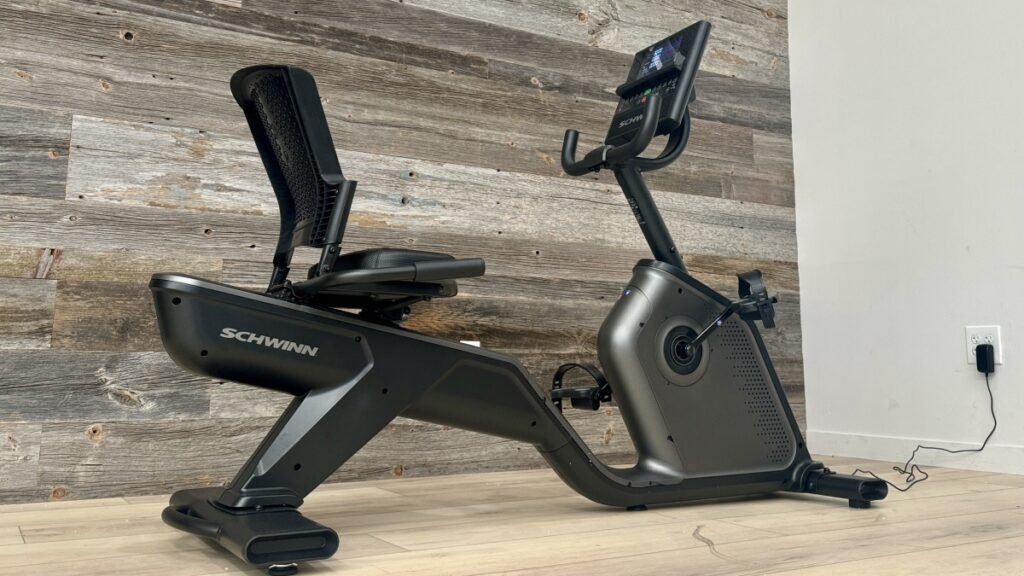
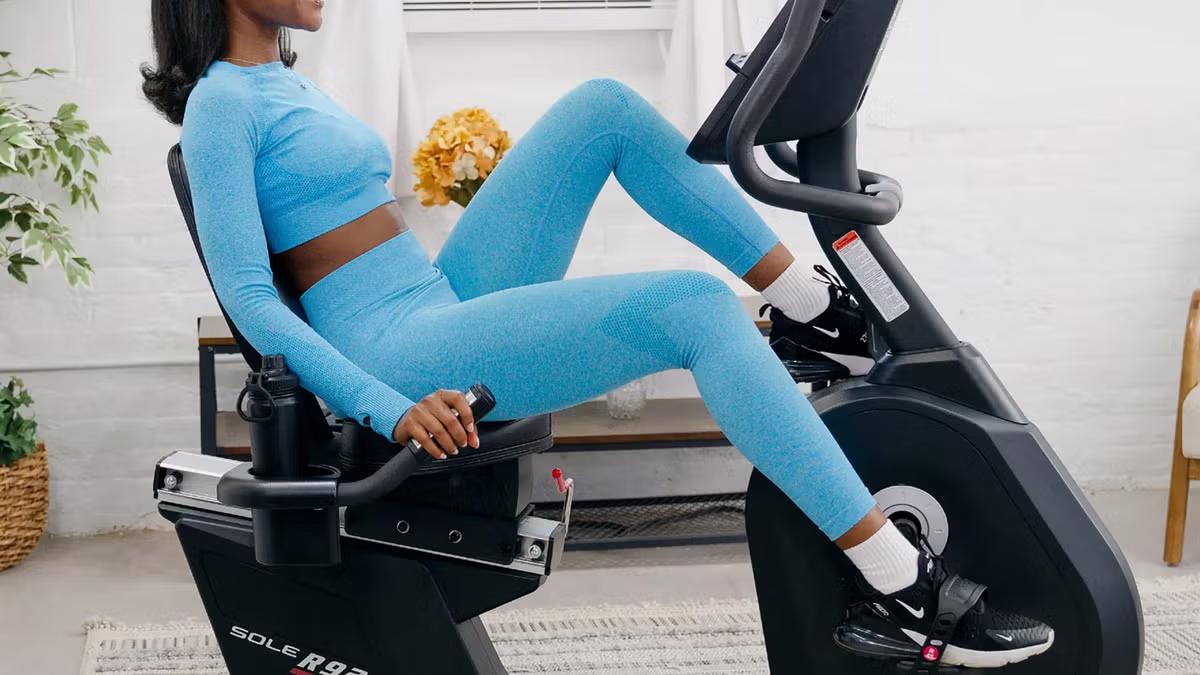
Recumbent Bike
- Seated in a reclined position
- Back fully supported
- Pedals positioned in front of your body
- Less pressure on joints
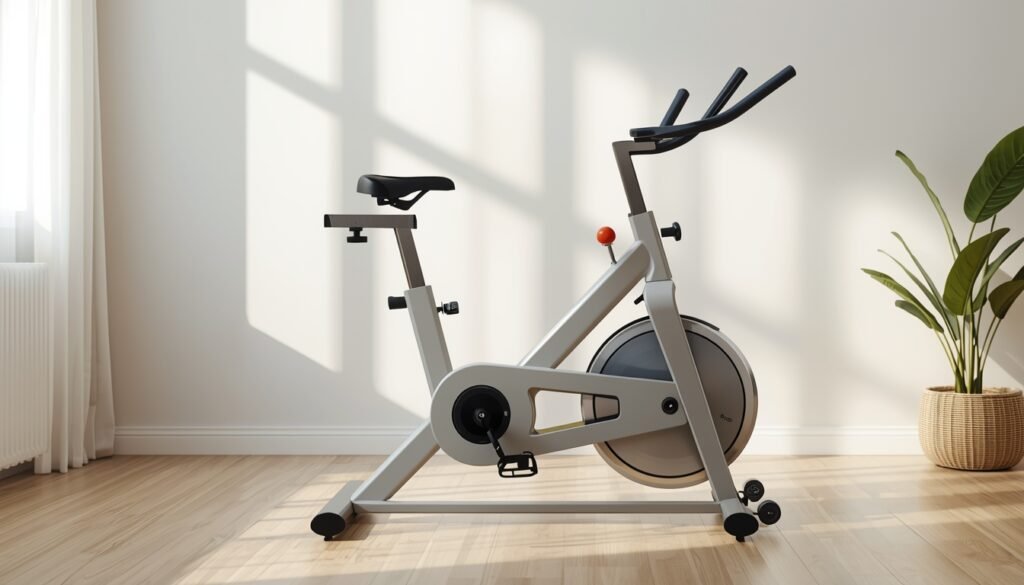
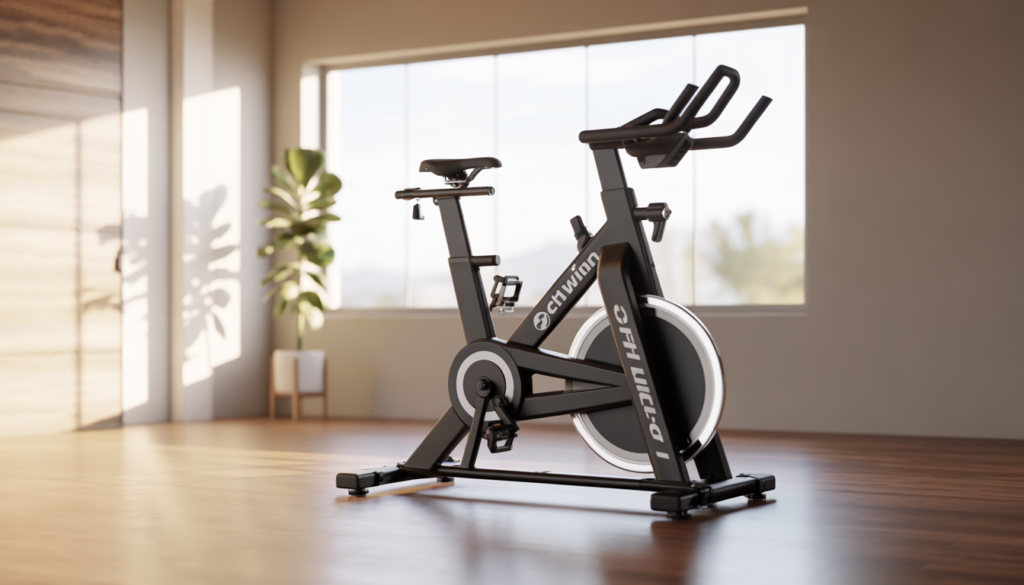
Upright Bike
- Seated upright (similar to a regular bicycle)
- No back support
- Pedals directly below you
- Requires balance and core engagement
But this isn’t just about posture.
👉 It changes how your muscles work
👉 How your joints feel
👉 And how safe the exercise is for beginners
Recumbent Bike vs Upright Bike: Which One Feels Easier for Beginners?
For most beginners over 50:
👉 Recumbent bikes feel easier immediately
Why?
- You don’t need to balance
- You don’t need strong core stability
- The seat supports your back
- Movement feels more controlled
An upright bike, on the other hand, can feel:
- unstable at first
- uncomfortable on the seat
- slightly intimidating for complete beginners
This is especially true if you relate to:
👉 I’m Completely Out of Shape at 55 — Where Do I Start Without Getting Hurt?
Which Bike Is Better for Adults Over 50 Starting at Home?
This is where things get interesting.
There is no single “best” option.
There is only:
👉 the one your body tolerates better
👉 the one you feel safe using
👉 the one you will actually stick with
In general:
✔ Recumbent bike is better for:
- complete beginners
- people with back discomfort
- people afraid of injury
- sedentary individuals
✔ Upright bike is better for:
- those with some fitness base
- people looking for slightly higher intensity
- those comfortable with balance
If you are unsure, this guide may also help:
Which Bike Is Easier on the Knees for Beginners?
This is one of the most searched concerns — and for good reason.
Recumbent Bike
✔ lower joint stress
✔ smoother movement
✔ less compression on knees
Upright Bike
✔ still low impact
❗ but slightly more load on joints
❗ requires better alignment
👉 For beginners with knee sensitivity,
recumbent bikes are usually the safer starting point
If knee discomfort is a concern, this can also help:
👉 10 Low-Impact Home Exercises for Beginners Over 50 With Knee Pain
Is a Recumbent Bike Better for Back Pain or Hip Discomfort?
For many people over 50:
👉 yes — significantly.
Because:
- your back is supported
- your hips are in a more neutral position
- less strain on the lower spine
Upright bikes can sometimes cause:
- lower back fatigue
- discomfort from prolonged sitting
- posture issues if not adjusted correctly
📊 COMPARISON BOX — FIRST DECISION VIEW
| Feature | Recumbent Bike | Upright Bike |
|---|---|---|
| Comfort | ⭐⭐⭐⭐⭐ | ⭐⭐⭐ |
| Ease for Beginners | ⭐⭐⭐⭐⭐ | ⭐⭐⭐ |
| Knee Impact | ⭐⭐⭐⭐⭐ (low) | ⭐⭐⭐⭐ |
| Balance Required | ❌ None | ✔ Yes |
| Back Support | ✔ Full | ❌ None |
| Intensity Potential | ⭐⭐⭐ | ⭐⭐⭐⭐ |
Which Bike Is Easier to Start With If You’re Completely Out of Shape?
If you are starting from zero:
👉 Recumbent bike wins — no debate
Because:
- it removes fear
- it removes instability
- it reduces physical stress
This connects directly with:
👉 Start Exercising at Home After Sedentary Lifestyle: What Actually Happens to Your Body After 50
Is Balance a Problem When Using an Upright Bike?
For many beginners, yes.
Especially if:
- you haven’t exercised in years
- you feel unstable
- you have joint stiffness
Upright bikes require:
✔ core engagement
✔ posture control
✔ seat positioning
None of that exists on a recumbent bike.
Which Bike Burns More Calories for Beginners?
Now we enter a different type of question.
👉 Results.
Upright bike:
✔ tends to burn more calories
✔ engages more muscles
✔ higher intensity possible
Recumbent bike:
✔ slightly lower calorie burn
✔ but more sustainable for beginners
👉 And here’s the truth most people ignore:
Consistency beats intensity.
Can You Lose Weight Using a Recumbent Bike?
Yes — absolutely.
But not because of intensity.
Because of:
✔ consistency
✔ safety
✔ low fatigue
If you can use it daily, even for short sessions, results come.
This connects with:
👉 How Many Minutes of Exercise Per Day Is Safe for Beginners Over 50 at Home? (2026)
Which Option Has a Lower Risk of Injury for Adults Over 50?
This is one of the most important questions — and one of the most ignored.
Because most people think:
👉 “If it’s a bike, it’s safe.”
But safety is not about the equipment.
It’s about how your body reacts to it.
🟢 Recumbent Bike (Lower Risk for Beginners)
✔ Stable position
✔ Back supported
✔ Less pressure on joints
✔ Reduced risk of falling or misalignment
👉 Ideal if you:
- feel insecure starting
- have joint discomfort
- haven’t exercised in years
🟡 Upright Bike (Still Safe — But Requires More Control)
✔ Low impact compared to running
✔ Good for cardiovascular fitness
❗ But:
- requires balance
- no back support
- can overload knees if poorly adjusted
👉 If your goal is safety first:
Recumbent bike is usually the better starting point.
When Should You Avoid Using an Upright Bike?
There are situations where an upright bike might not be the best first choice.
You should be cautious if you:
- feel unstable when sitting upright
- have lower back discomfort
- experience knee pain when pedaling
- are returning after a long sedentary period
In these cases:
👉 starting with a recumbent bike may help you build confidence first
What Are the Most Common Mistakes Beginners Make With Each Bike?
This is where many people go wrong — not because they choose the wrong bike,
but because they use it the wrong way.
❌ Mistakes on Recumbent Bikes
- Pedaling too fast too soon
- Assuming “easy = ineffective”
- Poor seat distance adjustment
❌ Mistakes on Upright Bikes
- Incorrect seat height
- Leaning forward excessively
- Forcing intensity too early
- Ignoring discomfort
👉 If you want to avoid these mistakes:
👉 How to Progress Your Home Workouts Safely (Without Injury or Burnout) (2026)
Which Bike Is Better for Small Apartments?
Now we enter a very real-life question.
Because choosing equipment isn’t just about health —
it’s also about space, comfort, and practicality.
🟢 Upright Bike
✔ More compact
✔ Easier to fit in small spaces
✔ Often lighter
🔵 Recumbent Bike
✔ More comfortable
❗ Takes more space
❗ Harder to move
👉 If space is limited:
Upright bikes usually fit better.
If you want to go deeper:
👉 Indoor Exercise Bike for Apartment: Can You Really Workout Without Noise Complaints? (2026)
Which Option Is Quieter for Apartment Living?
Good news:
👉 Both are generally quiet.
But there are differences.
🟢 Recumbent Bike
✔ Very smooth motion
✔ Minimal vibration
✔ Lower noise overall
🟡 Upright Bike
✔ Quiet if magnetic resistance
❗ Can create slight vibration
👉 If noise is a concern:
👉 Do Exercise Bikes Make Noise? What Apartment Buyers Should Know Before They Buy
Is Comfort Slowing Your Progress Without You Realizing?
This is a subtle — but powerful — question.
Many people assume:
👉 “More comfort = better choice”
But sometimes:
👉 too much comfort = less effort
Recumbent Bike
✔ comfortable
✔ easier to sustain
❗ but may reduce intensity
Upright Bike
✔ more active posture
✔ higher engagement
❗ less comfortable
👉 The key is balance:
Comfort helps consistency —
Intensity helps progression.
📊 COMPARISON BOX — REAL-WORLD DECISION
| Situation | Best Choice |
|---|---|
| Completely sedentary | Recumbent Bike |
| Knee discomfort | Recumbent Bike |
| Back pain | Recumbent Bike |
| Small apartment | Upright Bike |
| Want higher intensity | Upright Bike |
| Fear of injury | Recumbent Bike |
| Need motivation to start | Recumbent Bike |
| Want faster calorie burn | Upright Bike |
Which Bike Helps You Stay Consistent Over Time?
This is the most important question in the entire article.
Because results don’t come from:
❌ the best machine
❌ the most expensive equipment
They come from:
👉 what you can repeat consistently
And here is what usually happens:
- People start strong with upright bikes
- Feel discomfort
- Lose motivation
- Stop
While:
- Recumbent bike users
- Start slower
- Feel safe
- Keep going
👉 And consistency wins every time.
Who Should Choose a Recumbent Bike (And Who Shouldn’t)?
Choose a Recumbent Bike if you:
✔ are starting from zero
✔ feel insecure
✔ have joint sensitivity
✔ want comfort and safety
Avoid (or delay) if you:
❗ want high-intensity workouts immediately
❗ already have a good fitness level
Who Is an Upright Bike Really Best For?
Choose an Upright Bike if you:
✔ already have some conditioning
✔ want higher calorie burn
✔ feel stable and confident
Be cautious if you:
❗ are sedentary
❗ have joint discomfort
❗ struggle with balance
Recumbent vs Upright Bike: Which One Will You Actually Keep Using?
This is where most people finally understand the answer.
Not:
👉 which is better in theory
But:
👉 which works in real life
👉 If you are over 50 and starting:
The best bike is the one that feels safe, simple, and repeatable.
And for most beginners:
👉 that’s the recumbent bike
Which Option Has a Lower Risk of Injury for Adults Over 50?
This is one of the most important questions — and one of the most ignored.
Because most people think:
👉 “If it’s a bike, it’s safe.”
But safety is not about the equipment.
It’s about how your body reacts to it.
🟢 Recumbent Bike (Lower Risk for Beginners)
✔ Stable position
✔ Back supported
✔ Less pressure on joints
✔ Reduced risk of falling or misalignment
👉 Ideal if you:
- feel insecure starting
- have joint discomfort
- haven’t exercised in years
🟡 Upright Bike (Still Safe — But Requires More Control)
✔ Low impact compared to running
✔ Good for cardiovascular fitness
❗ But:
- requires balance
- no back support
- can overload knees if poorly adjusted
👉 If your goal is safety first:
Recumbent bike is usually the better starting point.
When Should You Avoid Using an Upright Bike?
There are situations where an upright bike might not be the best first choice.
You should be cautious if you:
- feel unstable when sitting upright
- have lower back discomfort
- experience knee pain when pedaling
- are returning after a long sedentary period
In these cases:
👉 starting with a recumbent bike may help you build confidence first
What Are the Most Common Mistakes Beginners Make With Each Bike?
This is where many people go wrong — not because they choose the wrong bike,
but because they use it the wrong way.
❌ Mistakes on Recumbent Bikes
- Pedaling too fast too soon
- Assuming “easy = ineffective”
- Poor seat distance adjustment
❌ Mistakes on Upright Bikes
- Incorrect seat height
- Leaning forward excessively
- Forcing intensity too early
- Ignoring discomfort
👉 If you want to avoid these mistakes:
👉 Is Simple Exercise Enough After 50? Walking, Cycling, Running & Dumbbells Explained (2026)
Which Bike Is Better for Small Apartments?
Now we enter a very real-life question.
Because choosing equipment isn’t just about health —
it’s also about space, comfort, and practicality.
🟢 Upright Bike
✔ More compact
✔ Easier to fit in small spaces
✔ Often lighter
🔵 Recumbent Bike
✔ More comfortable
❗ Takes more space
❗ Harder to move
👉 If space is limited:
Upright bikes usually fit better.
If you want to go deeper:
👉 How to Lose Weight Fast with an Exercise Bike: Practical and Effective Guide (2026)
Which Option Is Quieter for Apartment Living?
Good news:
👉 Both are generally quiet.
But there are differences.
🟢 Recumbent Bike
✔ Very smooth motion
✔ Minimal vibration
✔ Lower noise overall
🟡 Upright Bike
✔ Quiet if magnetic resistance
❗ Can create slight vibration
Is Comfort Slowing Your Progress Without You Realizing?
This is a subtle — but powerful — question.
Many people assume:
👉 “More comfort = better choice”
But sometimes:
👉 too much comfort = less effort
Recumbent Bike
✔ comfortable
✔ easier to sustain
❗ but may reduce intensity
Upright Bike
✔ more active posture
✔ higher engagement
❗ less comfortable
👉 The key is balance:
Comfort helps consistency —
Intensity helps progression.
📊 COMPARISON BOX — REAL-WORLD DECISION
| Situation | Best Choice |
|---|---|
| Completely sedentary | Recumbent Bike |
| Knee discomfort | Recumbent Bike |
| Back pain | Recumbent Bike |
| Small apartment | Upright Bike |
| Want higher intensity | Upright Bike |
| Fear of injury | Recumbent Bike |
| Need motivation to start | Recumbent Bike |
| Want faster calorie burn | Upright Bike |
Which Bike Helps You Stay Consistent Over Time?
This is the most important question in the entire article.
Because results don’t come from:
❌ the best machine
❌ the most expensive equipment
They come from:
👉 what you can repeat consistently
And here is what usually happens:
- People start strong with upright bikes
- Feel discomfort
- Lose motivation
- Stop
While:
- Recumbent bike users
- Start slower
- Feel safe
- Keep going
👉 And consistency wins every time.
Who Should Choose a Recumbent Bike (And Who Shouldn’t)?
Choose a Recumbent Bike if you:
✔ are starting from zero
✔ feel insecure
✔ have joint sensitivity
✔ want comfort and safety
Avoid (or delay) if you:
❗ want high-intensity workouts immediately
❗ already have a good fitness level
Who Is an Upright Bike Really Best For?
Choose an Upright Bike if you:
✔ already have some conditioning
✔ want higher calorie burn
✔ feel stable and confident
Be cautious if you:
❗ are sedentary
❗ have joint discomfort
❗ struggle with balance
For general physical activity recommendations for older adults, you can refer to the guidelines provided by the Centers for Disease Control and Prevention (CDC).
Recumbent vs Upright Bike: Which One Will You Actually Keep Using?
This is where most people finally understand the answer.
Not:
👉 which is better in theory
But:
👉 which works in real life
👉 If you are over 50 and starting:
The best bike is the one that feels safe, simple, and repeatable.
And for most beginners:
👉 that’s the recumbent bike📌 FAQ — Recumbent Bike vs Upright Bike for Adults Over 50
❓ Is a recumbent bike really better for seniors?
In many cases, yes.
Recumbent bikes are often better for seniors because they:
✔ provide back support
✔ reduce pressure on joints
✔ eliminate balance concerns
✔ feel safer for beginners
However, they may not be ideal for those seeking higher intensity training.
❓ Can I lose weight using either bike?
Yes — both can support weight loss.
The difference is how you use them:
- Upright bikes may burn more calories per session
- Recumbent bikes are easier to use consistently
👉 And consistency is what leads to results over time.
❓ Which bike is safer for knee pain?
In general:
👉 Recumbent bikes are safer for knee discomfort
Because they:
- reduce joint load
- offer smoother motion
- allow better control of resistance
But proper setup matters for both.
❓ Is an upright bike too difficult for beginners?
Not necessarily.
But for some people, it can feel:
- less stable
- less comfortable
- more physically demanding
If you are starting from zero, a recumbent bike may feel easier to adapt to.
❓ How long should beginners over 50 use a bike per day?
Most beginners benefit from:
✔ 10–15 minutes (starting phase)
✔ progressing to 20–30 minutes
Long sessions are not necessary in the beginning.
👉 Learn more here:
Weekly Home Workout Schedule for Beginners: A Simple Plan to Get Started (2026)
❓ Which bike is better for small apartments?
👉 Upright bikes are usually better for small spaces
Because they:
- take up less room
- are easier to move
- fit more easily into daily life
❓ Do recumbent bikes take up too much space?
They can.
Compared to upright bikes:
- they are longer
- require more floor space
- are less portable
But many users find the comfort worth it.
❓ Which bike is quieter?
Both are generally quiet, especially models with magnetic resistance.
However:
👉 Recumbent bikes tend to produce less vibration
👉 Upright bikes may transmit more noise through the floor
❓ Can I switch between both types of bikes?
Yes — and in some cases, that’s a great strategy.
You can:
- start with a recumbent bike
- build confidence and endurance
- gradually introduce an upright bike
❓ Which bike is better if I’m completely sedentary?
👉 Recumbent bike — without hesitation.
It removes:
- fear
- instability
- excessive strain
Making it easier to build a consistent routine.
❓ Is comfort more important than intensity after 50?
In the beginning, yes.
Because:
👉 comfort helps consistency
👉 consistency builds progress
Intensity can come later — safely.
💡 FINAL THOUGHT
Choosing between a recumbent bike and an upright bike is not about finding the “best” machine.
It’s about finding:
👉 the safest place to start
👉 the most comfortable way to move
👉 the option you won’t give up on after a few days
For many adults over 50, the biggest challenge isn’t physical.
It’s psychological:
- fear of injury
- lack of confidence
- uncertainty about where to begin
👉 And that’s where the recumbent bike often makes a difference.
Not because it is superior.
But because it removes barriers.
🎯 THE REAL ANSWER
If you are starting from zero:
👉 Recumbent bike is usually the better first step
If you already feel confident and want more intensity:
👉 Upright bike can be a great progression
👉 But the most important truth is this:
The best equipment is the one you will actually use.
🔗 CONTINUE YOUR JOURNEY
If you want to build a safe and consistent routine at home:
👉 Best Low-Impact Exercises for People Over 50 (And the Equipment That Makes Them Safer)
👉 Rowing Machine vs Exercise Bike: Which Is Better for Home Workouts in 2026?
👉 Are Dumbbells Safe After 50? A Beginner Guide to Strength Training Without Getting Hurt
Starting after 50 is not about doing more.
It’s about doing what your body accepts — consistently.
And sometimes, the difference between quitting and continuing…
is simply choosing the right starting point.