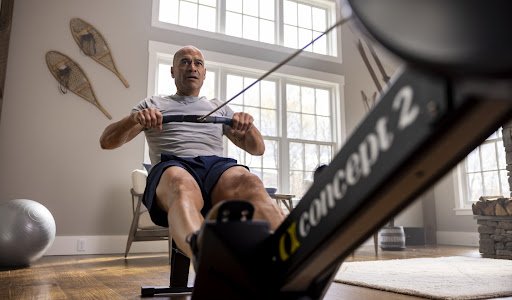
Is it really possible to get in shape working out only 3 days per week?
Is training only three days per week enough to improve your health?
Do you need to exercise every day to see results?
What if you feel tired, stiff, or out of shape and don’t know where to start?
Is it safe to begin exercising after 50 at home?

These are very common questions, especially for people who are starting exercise later in life or returning after many years without regular physical activity.
The good news is this:
Yes, exercising three days per week can be enough to improve strength, mobility, energy levels, and overall health — especially for beginners over 50.
In fact, for many beginners, training three days per week is safer, more sustainable, and more effective than trying to exercise every day.
Many people start exercising full of motivation and try to train every day. After two weeks, they feel tired, sore, and discouraged. Then they stop completely. Not because they are lazy, but because the plan was too aggressive.
A 3 day home workout schedule is different.
It gives your body time to recover, adapt, and get stronger without overwhelming your joints and muscles.
This type of schedule is especially helpful for:
- beginners
- adults over 50
- people returning after a sedentary lifestyle
- people with joint stiffness
- people who work sitting most of the day
- people who want to exercise safely at home
If you are just starting and feel unsure about how to begin safely, you may also want to read How to Start Exercising at Home After 50, which explains how the body adapts to exercise after years of inactivity.
The goal of this article is simple:
Show you exactly how a safe 3-day home workout schedule can look and how to follow it step by step.
Is training 3 days per week enough after 50?
This is one of the biggest doubts beginners have.
Many people believe that if they don’t exercise every day, they won’t see results.
But the reality is the opposite for beginners and older adults.
After 50, the body usually needs:
- more recovery time
- gradual progression
- lower impact training
- consistent but moderate exercise
Training three days per week allows the body to:
- recover between sessions
- reduce joint stress
- avoid excessive fatigue
- build strength gradually
- maintain motivation
- prevent injuries
Comparison — Training Every Day vs Training 3 Days Per Week
| Training Every Day | Training 3 Days Per Week |
|---|---|
| Higher fatigue | Better recovery |
| Higher injury risk | Lower injury risk |
| Hard to maintain | Easy to maintain |
| Motivation drops faster | Motivation stays higher |
| Joint stress increases | Joint stress controlled |
| Often leads to quitting | Easier to build habit |
For beginners, consistency is more important than frequency.
Exercising three days per week for six months is much better than exercising every day for two weeks and then stopping.
Why does a 3-day workout schedule work so well for beginners?
There are three main reasons why this schedule works very well, especially for people over 50.
1. Recovery becomes part of the plan
Many people don’t realize this, but the body becomes stronger during recovery, not during the workout itself.
When you exercise:
- muscles are stressed
- joints are loaded
- the nervous system works harder
During rest days:
- muscles repair
- joints recover
- coordination improves
- energy levels return
- strength increases
Without recovery days, the body accumulates fatigue and discomfort.
2. It reduces joint stress
After 50, joints like knees, hips, and lower back may already have some wear.
Training every day with impact exercises can increase discomfort.
A 3-day schedule reduces:
- knee stress
- lower back overload
- hip stiffness
- shoulder fatigue
3. It is easier to maintain long-term
The best workout plan is not the hardest one.
The best workout plan is the one you can follow for years.
A simple schedule like:
- Monday
- Wednesday
- Friday
is easy to remember and easy to maintain.

How should a 3-day home workout week be organized?
A good beginner schedule should include:
- strength training
- cardio
- mobility
- balance
- recovery
Example Weekly Structure
| Day | Workout | Focus | Time |
|---|---|---|---|
| Monday | Strength + Mobility | Muscles & joints | 30 min |
| Wednesday | Cardio + Core | Heart & endurance | 30 min |
| Friday | Strength + Balance | Stability | 30 min |
| Other days | Light walking | Movement | Optional |
| Sunday | Rest | Recovery | — |
This structure gives the body:
- movement
- strength
- endurance
- stability
- recovery
This is very important for beginners and adults over 50.
If you want beginner-friendly movements that are safe for joints, you may also read Safe Low Impact Exercises for Beginners.
What should you do on Day 1 (Strength and Mobility)?
The first workout day should focus on basic strength and joint mobility.
The goal is not heavy exercise.
The goal is to wake up the muscles and improve movement.
Day 1 Exercises Example
| Exercise | Reps | Sets |
|---|---|---|
| Chair Squats | 10 | 2 |
| Wall Push-Ups | 10 | 2 |
| Glute Bridges | 12 | 2 |
| Shoulder Circles | 15 | 2 |
| Gentle Stretching | — | 5 min |
Why these exercises are good for beginners
These exercises help:
- strengthen legs
- strengthen arms
- improve posture
- activate core muscles
- improve joint mobility
- reduce stiffness
- improve balance
They are safe and can be done at home without equipment.
What should you do on Day 2 (Cardio and Core)?
The second workout day should focus on cardio and core stability.
Cardio improves:
- heart health
- circulation
- endurance
- energy levels
- weight control
Core exercises improve:
- posture
- balance
- lower back support
- stability when walking
Day 2 Example
| Exercise | Time |
|---|---|
| Walking | 15 min |
| March in place | 5 min |
| Step touches | 5 min |
| Seated knee raises | 10 reps |
| Breathing exercises | 3 min |
If you prefer indoor cardio equipment, you might also be interested in Indoor Exercise Bike for Apartment, which explains quiet cardio options for small spaces.

What should you do on Day 3 (Strength and Balance)?
The third workout day should focus on strength again, but with balance and stability exercises.
Balance becomes very important after 50 because it helps prevent falls and injuries.
Day 3 Example
| Exercise | Reps | Sets |
|---|---|---|
| Sit to stand | 10 | 2 |
| Wall push-ups | 10 | 2 |
| Heel raises | 12 | 2 |
| One-leg balance | 15 sec | 3 |
| Stretching | — | 5 min |
These exercises help:
- leg strength
- ankle stability
- balance
- coordination
- posture
- walking stability
Balance training is one of the most importanHow many sets and repetitions should beginners over 50 do?
One of the most common mistakes beginners make is trying to do too much too soon.
Many people think that more repetitions and longer workouts automatically mean better results. But for beginners over 50, the goal is safe progression, not exhaustion.
A simple and safe structure works very well:
Beginner Training Structure
| Exercise Type | Sets | Repetitions |
|---|---|---|
| Leg exercises | 2 sets | 8–12 reps |
| Upper body | 2 sets | 8–10 reps |
| Core exercises | 2 sets | 10 reps |
| Balance | 2–3 sets | 15–20 seconds |
| Rest between sets | — | 30–60 seconds |
The workout should feel:
- slightly challenging
- but not painful
- not exhausting
- you should still be able to talk
- you should finish feeling better than when you started
This is very important for long-term consistency.
How should beginners progress after the first 4 weeks?
Many beginners don’t know when to increase difficulty. They either increase too fast or never increase at all.
Progression should be slow and controlled.
Example Progression Plan
| Weeks | What to Change |
|---|---|
| Weeks 1–2 | Learn movements |
| Weeks 3–4 | Increase repetitions slightly |
| Weeks 5–6 | Add one more set |
| Weeks 7–8 | Increase workout time |
| After 8 weeks | Add light weights or resistance bands |
Progress does not mean making workouts harder every week.
Progress can mean:
- better balance
- less fatigue
- easier walking
- less joint stiffness
- better posture
- more energy
- better sleep
These are all signs that your body is improving.
What if you feel tired, sore, or unmotivated?
This is extremely important and happens to almost everyone.
When starting a workout routine, beginners often feel:
- muscle soreness
- stiffness
- tiredness
- lack of motivation
- fear of injury
- doubt if the plan is working
This is normal in the beginning.
Difference Between Normal Soreness and Pain
| Normal Soreness | Warning Pain |
|---|---|
| Mild stiffness | Sharp pain |
| Appears next day | Appears during exercise |
| Improves with movement | Gets worse with movement |
| Goes away in 2–3 days | Lasts many days |
| Muscles feel tight | Joints hurt |
If you feel normal soreness, you can continue exercising.
If you feel pain, you should:
- rest
- reduce intensity
- adjust exercises
- check technique
Listening to the body is very important for beginners.

Can you combine this 3-day workout plan with walking, treadmill, or exercise bike?
Yes, and this is actually a very good idea.
On the days when you are not doing the main workouts, you can do light activity like:
- walking
- treadmill walking
- exercise bike
- stretching
- mobility exercises
This helps:
- circulation
- joint mobility
- recovery
- calorie burn
- energy levels
- mood
- sleep quality
If you want to understand how to organize a full weekly routine with different types of workouts, you may also read Weekly Home Workout Schedule for Beginners, which explains how to balance cardio, strength, and recovery during the week.
Common mistakes when following a 3 day workout schedule
Avoiding mistakes is just as important as doing the exercises.
Most common beginner mistakes:
1. Doing too much too soon
Beginners often start very motivated and push too hard in the first weeks.
2. Skipping warm-up
Warm-up prepares joints and muscles and reduces injury risk.
3. Ignoring rest days
Rest days are when the body becomes stronger.
4. Comparing yourself to younger people
After 50, the body adapts differently. Progress is still possible, but it must be gradual.
5. Expecting fast results
Fitness improvements take time.
6. Being inconsistent
Consistency is more important than intensity.
Comparison — Consistency vs Intensity
| Consistency | Intensity |
|---|---|
| Slow progress | Fast fatigue |
| Low injury risk | Higher injury risk |
| Habit building | Burnout risk |
| Sustainable | Hard to maintain |
| Long-term results | Short-term effort |
Consistency always wins.
How long until beginners over 50 start seeing results?
This is one of the most common questions.
The answer depends on:
- consistency
- sleep
- nutrition
- stress
- previous activity level
- age
- health condition
But most beginners notice improvements in stages.
Beginner Progress Timeline
| Time | What Usually Improves |
|---|---|
| 1–2 weeks | Less stiffness |
| 3–4 weeks | More energy |
| 4–6 weeks | Better balance |
| 6–8 weeks | More strength |
| 8–12 weeks | Visible changes |
| 3–6 months | Big health improvements |
Many beginners quit before week 4 because they expect fast results.
But the body is changing internally before visible changes appear.

Final Thoughts — The goal is not to train hard, the goal is to keep moving
Many people believe exercise must be intense to be effective.
But for beginners over 50, the most important things are:
- safety
- consistency
- recovery
- mobility
- gradual strength
- balance
- habit building
A simple 3 day home workout schedule can:
- improve health
- increase energy
- reduce stiffness
- improve balance
- support weight control
- improve mood
- improve sleep
- increase independence
- reduce fall risk
- improve quality of life
You don’t need perfect workouts.
You don’t need expensive equipment.
You don’t need long sessions.
You just need to start, move consistently, and be patient with your body.
For official physical activity recommendations for older adults, you can read the guidelines from the Centers for Disease Control and Prevention (CDC), which explain how moderate weekly activity improves long-term health and mobility.
FAQ — 3 Day Home Workout Schedule for Beginners Over 50
Is working out 3 days per week enough after 50?
Yes. For beginners and adults over 50, exercising three days per week is often ideal because it allows recovery between sessions while still improving strength, endurance, and mobility.
How long should each workout last?
Most beginner workouts should last between 25 and 40 minutes.
Can I walk on rest days?
Yes. Light walking on rest days can improve recovery and circulation.
Do I need equipment for this workout plan?
No. Most beginner exercises can be done using bodyweight and a chair.
Is this workout safe for bad knees?
Yes, if exercises are done slowly and with proper form. Low-impact exercises are recommended.
When will I start seeing results?
Most beginners notice improvements in energy and mobility within 3 to 4 weeks.
What if I miss a workout day?
Just continue with the next scheduled workout. Consistency over time is more important than a perfect week.
Can I lose weight with this workout plan?
Yes, when combined with balanced nutrition and consistent activity.
Should I stretch before or after workouts?
Light mobility before and stretching after workouts usually works well.
Can I increase workouts to 4 or 5 days later?
Yes, after a few months when your body adapts and you feel comfortable exercising more often.t things for long-term mobility.