
A practical, safe guide for starting movement again — without making your knees worse
❤️ Before You Begin – If you’re over 50, your health deserves attention — not pressure
10 Low-Impact Home Exercises for Beginners Over 50 With Knee Pain, Starting exercise after 50 can feel intimidating, especially if you already deal with knee pain. Many people worry that moving more will make their joints worse instead of better.
The truth is more nuanced.
Many people decide to start exercising later in life, especially after long periods of inactivity. If you are just beginning your fitness journey, you may also find this guide helpful: How to Start Exercising at Home After a Sedentary Lifestyle.
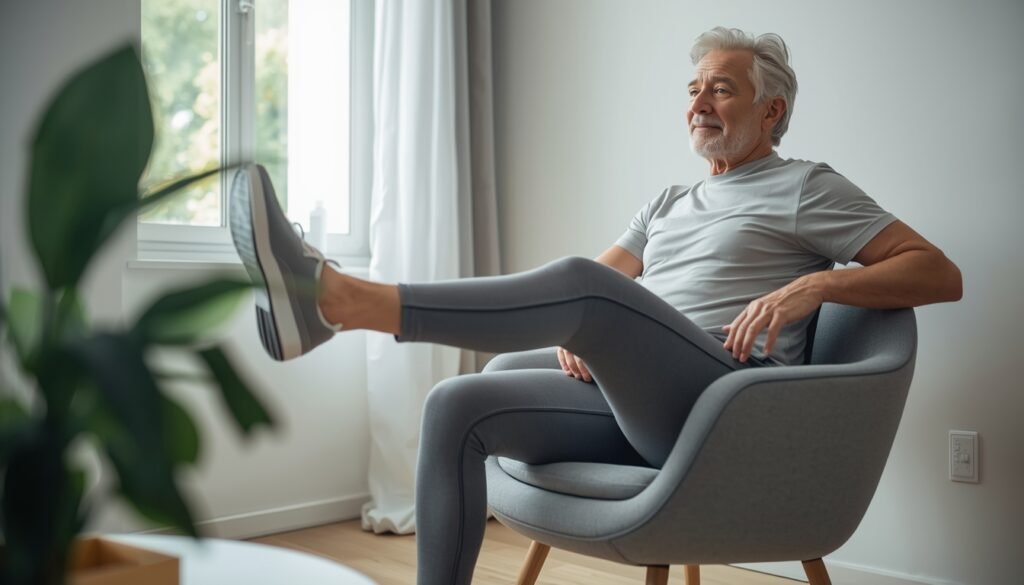
While certain movements can aggravate knee pain, the right types of exercises can actually help support the joint, strengthen surrounding muscles, and improve mobility over time.
This guide focuses specifically on low-impact exercises that place minimal stress on the knees, making them appropriate for beginners who want to move safely at home.
However, it’s important to keep a few things in mind:
- Mild discomfort when starting new movement is common
- Sharp or worsening pain is not normal
- If you have a diagnosed knee condition, consult a healthcare professional before starting any program
The goal of this guide is not to push your body harder.
It’s to help you move gently, safely, and consistently.
Why Low-Impact Exercise Matters for Knee Pain After 50
Knee pain becomes more common as we age for several reasons:
- cartilage wear
- reduced muscle strength
- joint stiffness
- reduced physical activity
- previous injuries
Many people respond to knee pain by moving less, which feels logical at first.
But over time, inactivity can actually worsen the problem.
When surrounding muscles become weak, the knee joint has to absorb more stress during daily activities like:
- walking
- climbing stairs
- standing from a chair
Low-impact exercises address this problem by strengthening the muscles that help stabilize the knee, including:
- quadriceps (front of the thigh)
- hamstrings (back of the thigh)
- glutes
- calves
- core muscles
When these muscles work together properly, they help reduce pressure on the joint itself.
That’s why physical therapists often recommend gentle strengthening exercises instead of complete rest.
If you are new to exercise after 50, it may help to understand what safe training looks like. Our Beginner Exercise Guide for Seniors explains what movements are safe and how to build a consistent routine.
Important Safety Guidelines Before You Start
Before trying any of the exercises below, keep these safety principles in mind.
Move slowly and with control
Fast or jerky movements place unnecessary stress on joints.
Avoid deep knee bending
Deep squats or lunges can compress the joint too much for beginners with pain.
Stop if pain increases
A mild stretch sensation is okay.
Sharp or worsening pain is not.
Use support when needed
A chair, wall, or countertop can help maintain balance.
Start with short sessions
Even 10–15 minutes is enough when beginning.
Consistency matters more than intensity.
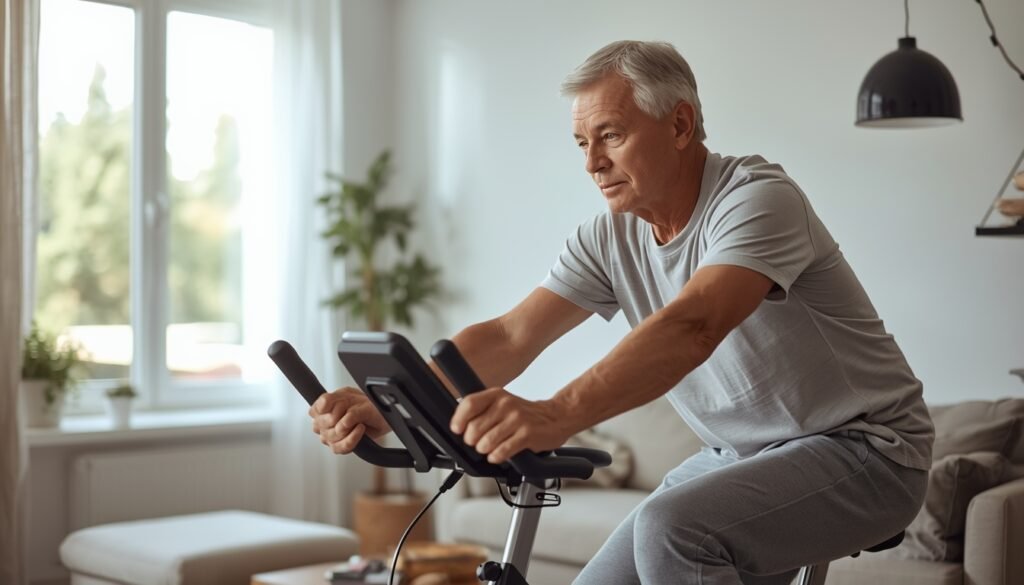
Exercise Comparison Overview
| Exercise | Difficulty | Knee Stress | Main Benefit |
|---|---|---|---|
| Seated Leg Raises | Easy | Very Low | Strengthens quadriceps |
| Heel Slides | Very Easy | Very Low | Improves mobility |
| Standing Calf Raises | Easy | Low | Improves stability |
| Wall Push-Ups | Easy | None | Upper body strength |
| Chair Sit-to-Stand | Moderate | Low | Functional leg strength |
| Glute Bridges | Easy | Very Low | Strengthens hips |
| Seated Marching | Easy | Very Low | Gentle mobility |
| Resistance Band Leg Extensions | Moderate | Low | Progressive strengthening |
| Step-Touch Movement | Easy | Low | Light cardio |
| Balance Hold | Easy | Very Low | Fall prevention |
Now let’s go through each one carefully.
1. Seated Leg Raises
This is one of the safest strengthening exercises for people with knee discomfort. Because the movement is performed while seated, the knee joint experiences very little pressure.
Why this exercise helps
The quadriceps muscles in the front of your thighs play a crucial role in supporting the knee. When they are weak, the joint has to absorb more force during everyday movements.
Seated leg raises help strengthen these muscles without forcing the knee to bear weight.
How to perform the exercise
- Sit in a sturdy chair with your back straight
- Place both feet flat on the floor
- Slowly extend one leg forward until it is almost straight
- Hold the position for about 3 seconds
- Lower the leg slowly back down
- Repeat with the other leg
Suggested starting routine
- 8–10 repetitions per leg
- 2 sets
Tips for safety
- Keep movements slow and controlled
- Avoid locking the knee completely
- Stop if the movement causes sharp pain
2. Heel Slides
Heel slides are commonly used in knee rehabilitation programs because they gently improve the joint’s range of motion.
Why this exercise helps
When knee joints become stiff, everyday movements can feel uncomfortable. Heel slides encourage gentle bending and straightening without placing weight on the joint.
How to perform the exercise
- Lie on your back on a comfortable surface
- Keep both legs extended
- Slowly slide one heel toward your body
- Bend the knee as far as comfortable
- Pause briefly
- Slide the heel back to the starting position
Suggested starting routine
- 10 repetitions
- 2 sets
Tips for safety
- Move slowly
- Avoid forcing the knee beyond comfortable range
- Stop if swelling increases
3. Standing Calf Raises
The calf muscles play a surprisingly important role in knee stability.
Why this exercise helps
Strong calves help support the entire lower leg during walking and standing. Strengthening them improves overall leg stability and balance.
How to perform the exercise
- Stand behind a chair or near a wall
- Place your hands lightly on the support
- Slowly raise your heels off the floor
- Lift until you are standing on your toes
- Hold for 2 seconds
- Lower slowly
Suggested starting routine
- 10–12 repetitions
- 2 sets
- If you want a structured plan to follow, you can also explore this Weekly Home Workout Schedule for Beginners.
Tips for safety
- Avoid bouncing
- Move slowly both up and down
- Keep your knees slightly relaxe
4. Wall Push-Ups
This exercise strengthens the upper body while keeping pressure completely off the knees.
Why this exercise matters
Many beginners focus only on leg exercises when dealing with knee pain. But strengthening the upper body improves overall posture and functional strength.
Wall push-ups are an excellent starting point.
How to perform the exercise
- Stand facing a wall
- Place your hands on the wall at shoulder height
- Step slightly backward
- Bend your elbows and lean toward the wall
- Push back to the starting position
Suggested starting routine
- 10 repetitions
- 2 sets
Tips for safety
- Keep your body in a straight line
- Avoid arching your lower back

5. Chair Sit-to-Stand (Modified Squat)
This movement trains one of the most important daily functions: standing up from a chair.
Why this exercise helps
The ability to sit and stand safely is essential for independence as we age. Strengthening the muscles involved helps reduce strain on the knees during daily life.
How to perform the exercise
- Sit in a sturdy chair
- Place feet shoulder-width apart
- Lean slightly forward
- Push through your heels to stand up
- Slowly sit back down
Suggested starting routine
- 8 repetitions
- 2 sets
Tips for safety
- Use armrests if needed
- Avoid dropping quickly into the chair
Low-Impact Exercises Comparison
| Exercise | Difficulty | Knee Impact | Main Benefit | Best For |
|---|---|---|---|---|
| Seated Leg Raises | Easy | Very Low | Strengthens quadriceps | beginners with knee pain |
| Heel Slides | Very Easy | Very Low | Improves knee mobility | stiff joints |
| Standing Calf Raises | Easy | Low | Improves stability | walking support |
| Wall Push-Ups | Easy | None | Upper body strength | beginners |
| Chair Sit-to-Stand | Moderate | Low | Functional leg strength | daily movement |
| Glute Bridges | Easy | Very Low | Strengthens hips | knee support |
| Seated Marching | Easy | Very Low | Gentle mobility | circulation |
| Resistance Band Leg Extensions | Moderate | Low | Progressive strength | rehab strength |
| Step-Touch Movement | Easy | Low | Light cardio | endurance |
| Balance Hold | Easy | Very Low | Fall prevention | stability |
Common Mistakes When Exercising With Knee Pain
Many beginners over 50 start exercising with good intentions but unknowingly make small mistakes that can increase knee discomfort.
Understanding these mistakes can help you exercise more safely and avoid unnecessary setbacks.
Moving Too Fast
One of the most common errors beginners make is performing exercises too quickly. Fast movements reduce control and can place unnecessary stress on the knee joint.
Low-impact exercises are most effective when they are performed slowly and with control. Moving slowly allows your muscles to do the work instead of forcing the joint to absorb the pressure.
If you notice yourself rushing through repetitions, slow down and focus on controlled movement.
Ignoring Early Pain Signals
Your body often sends warning signals before a minor irritation becomes a larger problem.
Some beginners try to push through pain because they believe discomfort is part of exercise. While mild muscle fatigue is normal, sharp or increasing knee pain is not.
If a movement causes sharp discomfort, it is best to stop the exercise and allow the joint to rest.
Pain that continues after exercise may indicate that the movement needs to be modified.
Skipping Warm-Up Movements
Starting exercises without warming up the body can make joints feel stiff and uncomfortable.
Even a short warm-up helps prepare muscles and joints for movement.
A simple warm-up may include:
- gentle walking in place
- light leg movements
- slow arm circles
Just 3–5 minutes of gentle movement can make exercises feel much easier on the joints.
Regular movement after 50 can improve mobility, cardiovascular health, and overall wellbeing. Learn more in our guide about the Benefits of Exercise After 50.
Bending the Knee Too Deeply
Deep squats or lunges are common in many workout routines, but they are not always appropriate for beginners with knee discomfort.
When the knee bends too deeply, the pressure inside the joint increases significantly.
Beginners should focus on shallow, controlled movements until strength improves.
For example, a chair sit-to-stand movement should only involve a comfortable range of motion.
Doing Too Much Too Soon
Motivation is great, but doing too much exercise in the beginning can cause soreness or irritation.
Many beginners feel excited during the first few days and try to complete long sessions. Unfortunately, this often leads to fatigue or joint irritation.
A better strategy is to start small and build gradually.
Even 10–15 minutes of movement can be very beneficial when starting out.
Consistency is far more important than intensity.

A Simple Weekly Routine for Beginners Over 50
Many beginners wonder how often they should exercise, especially when dealing with knee discomfort.
The goal is to move regularly while giving your body enough time to recover between sessions.
For most beginners over 50, a simple routine of 3 to 4 exercise days per week works very well.
Below is an example of a gentle weekly structure.
Example Beginner Routine
Day 1 – Gentle Strength
Focus on simple strengthening exercises such as:
- Seated leg raises
- Chair sit-to-stand
- Standing calf raises
Perform 2 sets of each movement with slow and controlled repetitions.
The goal is not to exhaust the muscles but to gently activate them.
Day 2 – Light Mobility and Movement
This session focuses on keeping the joints moving without stressing them.
Good exercises include:
- Heel slides
- Seated marching
- Light step-touch movements
These exercises help improve circulation and maintain mobility.
Day 3 – Rest or Light Walking
Rest days are just as important as exercise days.
Your muscles need time to recover and adapt to new movement.
If you feel comfortable, you may take a short walk at a relaxed pace.
Walking on flat surfaces is usually easier on the knees than walking on hills.
Day 4 – Strength and Balance
On this day, you can repeat some strengthening exercises while adding gentle balance training.
Examples include:
- Glute bridges
- Resistance band leg extensions
- Balance holds while holding a chair
Balance exercises are especially important after 50 because they help reduce the risk of falls.
Progress Slowly
As your strength improves, you may gradually increase:
- repetitions
- number of sets
- duration of exercise sessions
However, increases should always be gradual.
Your body will respond best to steady and consistent progress.
Many people prefer exercising at home because it provides flexibility and comfort. If you’re building a home fitness routine, you may also enjoy reading How to Build a Home Gym on a Budget.
❓ FAQ Section
Is it safe to exercise with knee pain after 50?
In many cases, yes. Gentle low-impact exercises can actually strengthen the muscles that support the knee joint and reduce discomfort over time. However, exercises should always be performed slowly and within a comfortable range of motion. If pain becomes sharp or worsens during movement, it is best to stop and consult a healthcare professional.
What exercises should seniors avoid with knee pain?
People with knee pain should generally avoid high-impact movements such as running, jumping, deep squats, and lunges. These exercises place significant pressure on the knee joint and may worsen inflammation or joint irritation.
How often should beginners over 50 exercise?
For most beginners, exercising 3 to 4 days per week is a safe starting point. Sessions can be short, around 15–25 minutes, focusing on gentle strengthening and mobility rather than intensity.
Can exercise actually reduce knee pain?
Yes. When performed correctly, strengthening exercises can improve muscle support around the knee. This reduces the load placed on the joint and often leads to improved mobility and less discomfort during daily activities.
Is walking good for knee pain?
For many people, walking at a comfortable pace on flat surfaces can be beneficial. However, individuals with significant knee discomfort should start with strengthening and mobility exercises before increasing walking distance.
Continue Learning About Safe Exercise After 50
Starting a new exercise routine after 50 is one of the best decisions you can make for your long-term health. Gentle, consistent movement can improve mobility, strengthen muscles, and help protect your joints over time.
If you would like to learn more about how physical activity supports healthy aging, you can explore this trusted resource from Harvard Health Publishing:
👉 Exercise and aging: Can you walk away from Father Time?
This guide explains how regular physical activity can support strength, mobility, and overall wellbeing as we age.
Always remember: progress doesn’t require intensity.
Consistency, patience, and safe movement are what truly make the difference.

